

ICEMAN
He Kept the Paperwork Clean. And Waited.

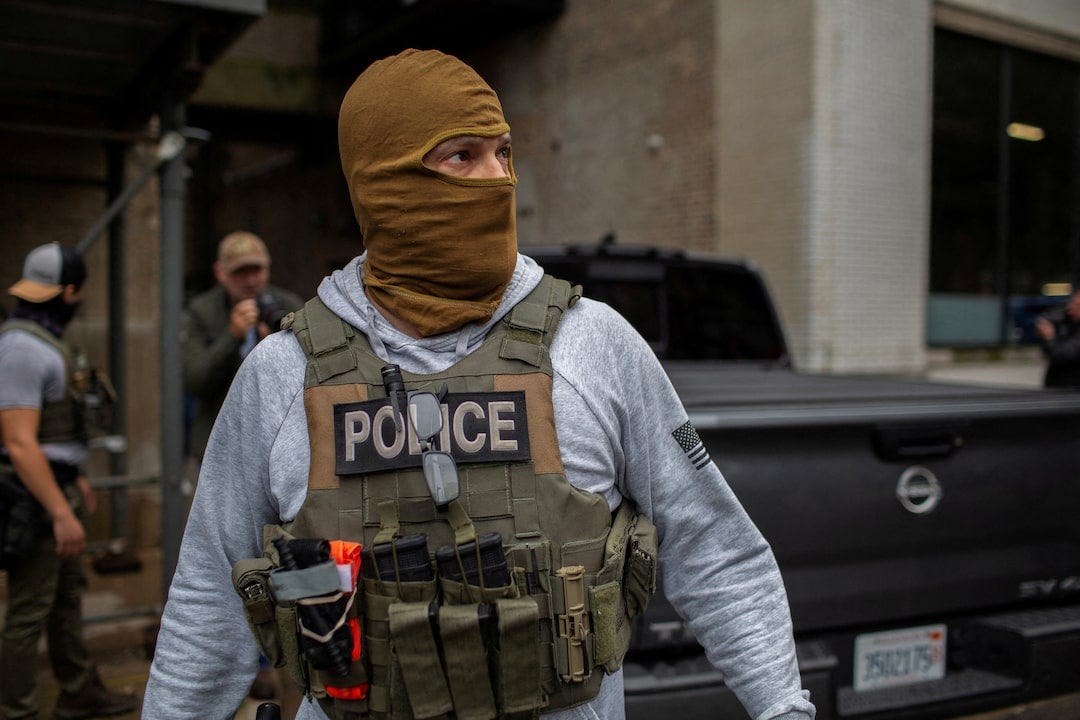
I’m resharing this now because of what just happened in Minnesota. Because we watched a killing get laundered through official language in real time. Because “self-defense,” “protocol,” and “ongoing investigation” are doing the same work they always do, turning a human death into an administrative event. This piece is about that machinery, how men are trained, rewarded, and protected for keeping things clean on paper while lives are destroyed off camera. If the story feels uncomfortably close, that’s because it is.
They tell you it takes two to make a baby. That’s a lie. It takes one mistake and one excuse.
Her name was Rachel. She worked at the Casey’s on 4th and Main, wore too much eyeliner, and knew exactly how to fake a laugh when I said something crude. That kind of girl.
I wasn’t even seeing her. Not really. It was just what people did in towns like ours. You get drunk, crawl in the back of a pickup, and make a mess of your life. She told me she was on the pill. That was her line. I didn’t think about it after.
She told me she was pregnant in the Dairy Queen parking lot. I was halfway through a dipped cone when she pulled up, leaned out the window, and said, real soft, “We need to talk.” Girls like her don’t want to talk unless they’re holding a hand grenade.
I didn’t say much. Just nodded and finished the cone. She cried. I watched. Didn’t touch her. Never believed in playing pretend.
My dad told me to “do the right thing.” He’s the kind of man who thinks there’s a right thing left in this world. My mother cried and quoted Bible verses. Rachel’s dad came by once. Polite enough, but I saw his fists, veins like wires pulsing under the skin of his forearms.
They wanted me to marry her. Settle down. Get a job at the Co-Op. Sell propane. Raise fat, dull-eyed kids in a trailer by the river.
I walked into the Army recruitment office on a Wednesday morning and told them I was ready. Didn’t want a signing bonus. Wanted infantry. Boots on dirt. A weapon that made people scatter.
They ran the tests. I passed everything. ASVAB scores high, especially mechanical comprehension. The recruiter smiled. “You’re not stupid,” he said. “You could go aviation or logistics.” I said I didn’t care. Infantry. Boots on dirt.
He said, “Alright then. Hooah.”
Left town a week later. Didn’t tell Rachel. Didn’t leave a note. Silence is cleaner than words.
Basic training was easy. They shaved everything. Lost our names. Made us weapons. I was already one.
Some cried at night, whispered to moms on Sunday calls. I had nothing to say. Drill sergeants liked me. I did what I was told. Didn’t flinch. Didn’t complain.
I learned how to clean an M4 faster than anyone. My bunk was perfect. Corners tight. No dust. No scratches. They let me run inspections.
By month two, I had a friend named Casey from Alabama. Red haired, thick necked. We talked about girls who liked it rough, who said no but meant yes. How you could tell by their breathing, their hips. His dad taught him that. We got along.
Heat at Fort Hood was a mercy. Made people weak. Weak people are predictable.
We deployed twice. Nothing major. Routine security. Training missions. One small border op in a dusty country nobody can pronounce. Told to stabilize local forces, but mostly drove armored trucks and searched mud huts. Didn’t shoot anyone directly, but saw what happened when people didn’t follow orders. Learned how to make someone disappear with paperwork. Hurt without leaving a mark.
Some guys went soft after second deployment. PTSD, moral injury, therapy words. I didn’t feel anything. Slept fine. Hands steady. Room clean.
One night, Morales cried in the latrine about a kid shot by mistake. I told him it wasn’t a mistake. Kid shouldn’t have been there. Shouldn’t have run. Morales never looked at me the same. I didn’t care.
I extended once but knew I wouldn’t stay forever. Army has rules. Too many cameras. Too many forms. No fun. No improv.
Got out on a Thursday. No party. Packed a duffel. Signed papers. Shook commander’s hand. Left the base with forty eight thousand dollars in savings and no address.
Rachel had the kid. Heard it through Facebook. A boy, I think. Didn’t check. Blocked her after she posted the baby in a camo onesie. Said he was just like Daddy. Made me want to puke.
Moved to Arizona. Cheap rent. Close to the action. Found a listing for ICE on a veterans’ job board. They liked my experience. Said I looked sharp in interviews. Said I was the kind of man who didn’t blink.
Background check was a joke. Asked if I’d had disciplinary trouble in the Army. I said no. They believed me. There’s nothing in writing. You can do anything if it’s not in writing.
ICE academy was a joke. Half the guys were soft as pudding. College kids wanting to wear a gun and feel important. But there were a few like me. Hard men. Men who understood what America really needed. Clean borders. No hand wringing.
I learned the lingo. The forms. How to phrase things just right. You don’t say “He begged for water and we ignored him.” You say “Detainee did not request hydration within scheduled intervals.” You don’t say “We slammed his head into the wall.” You say “Subject resisted during transport and force was applied in accordance with agency protocol.”
Passed every test. Got my badge. Got my gun. Got my freedom.
They issued me a Ford Explorer with blacked out windows and two spare magazines. The badge came in a felt box. The uniform fit better than anything the Army ever gave me. I wore it like armor. Sometimes they make us wear masks. Policy. Optics. Especially during high visibility operations. Most guys complain. I love it.
There’s a silence behind the mask. A stillness. People can’t see your face, so they make you into whatever they fear most.
I wear it even off duty. In the garage. Watching raid footage. The mask turns my face into a weapon. My skin disappears. I become what they imagine. I become truth.
My tattoos run under the sleeves. Swastikas. Black suns. Old-school Nazi shit. Hidden but never gone. I keep them for me. Reminders. Identity. It’s all symbols. You wear them, or you live them.
ICE didn’t care about your feelings. They cared about the forms. You do your job, file your paperwork, and you don’t make them look bad. That’s all. You don’t have to be a saint. You don’t even have to be smart. You just have to keep the optics clean.
First week on the job, I shadowed a guy named Fenton. Ex-Marines. Bald. Mean. Spit when he talked. He said, “You want to survive here, keep the bodycam angled down and your reports tight.” That was all the advice I ever needed.
We worked out of a field office near Nogales. Real border town. Smelled like sun baked urine and fast food. Half the motels were full of migrants waiting to get processed or deported. The other half were full of agents like us, sitting in silence, cleaning weapons, watching cable news at full volume.
Trump rallies blasted on TVs in the break room. “Make America Great Again,” they chanted on the screen. I liked it. The simplicity. The promise of keeping this country pure. The voice made sense to me. I watched his face, how it twisted into authority. It reminded me of my drill sergeant, of my father, of what I wanted to be.
We rolled out before dawn. The air was still cool, but you could taste the heat waiting in the coming hours like a threat. The raids were a theater of control. It didn’t matter what we found,guns, paperwork, children asleep on the floor. It was about how we were seen. We were the morning storm. No sirens. No warnings. Just hard fists and cold language.
Some houses were almost too easy. A knock. A pause. Then faces at the windows, wide eyed, desperate. Mothers with infants already wrapped. Grandmothers whispering prayers. You cuff them in front of everyone. Show dominance early. Let the neighborhood feel it.
Others went sideways. Hidden crawlspaces. Bolted rooms. Once, a teenager threw a pot of boiling water as we breached the door. It hit Fenton. His skin bubbled under his sleeve. He didn’t scream. Just pulled his sidearm and shouted for everyone to get down.
I remember looking at the boy. Maybe sixteen. Still holding the pot. Just standing there. Fenton grabbed him by the collar and dragged him to the lawn. No camera on that moment. My report didn’t mention the scream.
The job teaches you how to narrate reality. How to say what they want to read. A woman fell down the stairs once while I was dragging her. Pregnant. I saw her land hard. Belly first. The report read: “Subject lost balance during guided descent.”
They taught us how to lie without lying.
I liked the field work. The noise. The eyes on me. The little kids clutching their mothers and whispering words I didn’t understand.
Sometimes, late at night, we’d bring them in off-books. No paperwork. Just time to kill before shift change. The holding rooms had no cameras. One way glass, steel chairs, concrete floors that stank of bleach and piss. I’d sit across from them and just wait. Didn’t have to say anything. Silence is a scalpel. You learn quick that they’ll lie. I didn’t listen to the words. I looked at the hands. The hands always tell you more.
One time I left a man in the chair for seven hours. Didn’t feed him. Didn’t speak. Just sat there with my elbows on the table, breathing. Watching. He broke himself. Started muttering prayers. I leaned forward and whispered, “God’s not on this side of the wall.” Then I left. He pissed himself and cried for an hour. I listened from the hallway. That was enough.
We had a closet we called “the fridge.” Technically it was an old walk-in freezer used for storing riot gear. We used it for other things. Make a man cold enough and he’ll tell you anything. Or nothing at all. Either way, he’s quieter when he comes out.
I started keeping trophies. Not big ones. A broken sandal. A strip of cloth from a woman’s blouse,an earring.A child’s drawing left behind in a processing center. I pinned them to a corkboard in my garage like dead butterflies. Little artifacts. Proof that I’d touched lives. Changed them.
There was a girl once,six, maybe seven. Clung to her mother while we searched their trailer. Eyes too big for her face. She kept humming something under her breath, a lullaby or a prayer. I bent down, looked her dead in the eye, and said, “You’ll forget this. But your body won’t.” The mother screamed. Fenton had to pull me out before the supervisor arrived.
They said I needed a break. Mandatory wellness check. Nothing on the books,just a week off, no badge. I spent it watching footage,old raids, checkpoint footage, helmet cams. I took notes. Practiced my reports in the mirror.
When I came back, they said I seemed centered. Focused.
I was.
I made a name for myself in the office. Zero mistakes. No IA investigations. I trained new recruits. Taught them how to speak during raids. Keep sentences short. Never say “I think.” Only say “I observed.” Tell the story like it already happened, like it couldn’t have gone any other way.
After a year, I got a letter of commendation. Regional Director signed it. Said I was a model officer. They sent me to San Antonio to speak at a conference. I stood behind a podium and talked about restoring order. Got a standing ovation.
They started inviting me to events. Patriot coalitions. Retired sheriffs. Militia types. They liked me. Said I was what law enforcement used to be. Pure. Direct. Unapologetic.
One guy asked if I’d ever killed anyone. I said, “Not yet.”
He said, “You will.”
We had a tip about a drop house. Four units. No sirens. Just permission. I kicked the door.
A man, maybe twenty, bolted through the back. I chased him down a dirt alley. Told him to stop. He didn’t.
So I shot him.
One round. Center mass. He dropped before the echo faded. No weapon. Just a phone and a protein bar. My partner asked, “You good?”
I said, “He ran.”
The report was clean. “Subject expired on scene during lawful apprehension.” Eighteen minutes from shot to signature.
The review cleared me. No suspension. No questions. They flew me to DC. Put me in a suit. Called me a hero. Fox ran the story. A flag pin. A framed certificate. Applause.
Nobody said the kid’s name.
The only message I got was from a blocked number. “He was my brother.”
I didn’t respond.
Sometimes I watch the footage. Just the last second. The kid running. Dust under his feet.
That’s the moment I like.
The clean space before the bullet lands. Before the world remembers it’s mine to shape.
I keep everything spotless. I lift weights. I sleep fine. I don’t feel.
They think men like me fade out. Get tired. Move on.
They think we were an accident of history.
But history is a loop.
And I’m patient.
I read the signs. The slogans. The way people talk when they think no one’s listening.
They want someone to fix it.
They want order.
They want permission.
I’ll be there when the curtain drops.
Not hiding. Not whispering. Not filing reports.
I’ll be standing in the daylight, unmasked, waiting for the next command.
And I won’t need to lie anymore.
Because the world will already believe me.
This country doesn’t change.
It remembers.
And when it calls, I’ll answer.
Not with words.
With fire.
If you value work like this and want it to continue, please consider becoming a paid subscriber. Your support keeps this writing independent, unsanitized, and free from the pressures that flatten hard truths into something easier to swallow. Paid readers make this possible.
A window into a mindset that most of us could never fathom, and yet, we all know this to be true. We're seeing it in real time. The horror, the denial, the heartlessness of all of it. If you weren't such an empath, Tom, you'd be unable to sense into this character. I can't imagine it was easy for you to go there, to hold that energy to finish the piece. An important piece. Dark times. Dark reality.
That was a hard read. I've despised bullies since I was a kid, and unfortunately most law enforcement are bullies with badges. And I'm speaking from experience as I have numerous retired law enforcement in my family and have worked with many more. I don't know what the fucking answer is although I know how I'd like to handle these douchebags. We are reliving Nazi Germany in real time.