

Unmanageable: On Refusing Fear
When the only weapon left against autocracy is the refusal to be managed

I was drinking coffee when I understood what resistance writing actually is. The cup was heavy ceramic, the kind they used to make before everything got light and disposable, and the coffee had gone cold in that particular way that makes you aware of time passing. It was the third cup. I had not eaten. The understanding came not as revelation but as recognition of something I had always known.
Donald Trump is president.
I am not afraid and therefore I am not manageable. This is the only freedom left. This is how we beat him.
Let me tell you what it means to be manageable. To be manageable is to calculate consequences before speaking. To be manageable is to moderate your anger so that it does not provoke retaliation. To be manageable is to participate in systems of your own oppression because the alternative is exclusion, punishment, exile.
Trump understands management better than anyone in American politics. Not because he is intelligent,he is not intelligent,but because he understands instinctively that power is not about force. Power is about making people manage themselves. Power is about making people so afraid of consequences that they silence themselves before you have to silence them.
This is how autocracy works. Not through spectacular acts of repression but through the cultivation of self censorship, through the understanding that speaking up will cost you your job, your safety, your place in society. Through the slow accumulation of fear until fear becomes habit, until habit becomes character, until you can no longer remember what it felt like to speak without calculating consequences.
I have never been manageable. This is not virtue. This is temperament, inheritance, the particular way my father’s father came from Ireland with nothing and decided that having nothing meant there was nothing they could take from you. This is what my father learned in the Pacific in 1945,that fear is optional, that you can walk through fire and come out the other side and realize that the fire was not the worst thing.
My father came back from the war and put up with no shit from anyone. Not the banks. Not the government. Not the men who thought they could push him around because he was just another farmer. He was quiet but the quiet was not submission. The quiet was a loaded gun he never had to fire because everyone knew it was loaded.
I inherited this. The understanding that being manageable is worse than any consequence of being unmanageable. The understanding that fear is a choice and I choose not to be afraid.
This is not bravery. Bravery is feeling fear and acting anyway. This is something else,the recognition that fear itself is a tool of control, that the moment you accept fear as reasonable, as prudent, as the proper response to power, you have already been managed. You have already lost.
I am not afraid and therefore I am not manageable.
Let me tell you what this means in practice. It means when they threaten, you do not calculate whether the threat is credible. It means when they promise consequences, you do not weigh the cost of resistance against the cost of compliance. It means you speak as if you are already free, as if the power they claim over you does not exist, as if their ability to punish you is irrelevant to whether you will tell the truth.
This drives them insane. Because their entire system depends on your fear. On your calculation. On your willingness to manage yourself to avoid consequences they may or may not actually impose.
The wind outside never stops. It comes across a thousand miles of nothing and arrives here with the memory of everything it has passed through,dust from the sandhills, smoke from the fires, the smell of distance and time. My grandfather stood in this wind. My father stood in this wind. I stand in this wind. It has never stopped blowing and it has never managed to break anything that refused to break.
Trump’s first term taught us this, though most people did not learn it. He makes threats. He promises retribution. He names enemies. And people,even people who claim to oppose him,moderate their language, soften their criticism, calculate what they can safely say.
This is exactly what he wants. The threat is the point. The threat is more powerful than the action because the threat makes people silence themselves. The threat makes people manageable.
I watched this happen in 2017, 2018, 2019, 2020. I worked in finance then. I watched colleagues who claimed to oppose him go silent when it mattered, when speaking up might cost them clients, cost them deals, cost them their place in the system. I watched the entire apparatus of resistance make itself manageable.
And Trump won. Not because he was strong. Because we were manageable.
This is western Nebraska. This is where the sky goes on forever and the wind never stops and you learn early that the landscape does not care about you, that survival is not guaranteed, that the only choice you have is whether you will face what is coming or whether you will pretend it is not coming until it arrives.
Being manageable is complicity.
Let me tell you what Trump fears. He does not fear Democrats or Republicans or the media or the courts. He does not fear institutions or norms or the rule of law. Those things can be captured, can be corrupted, can be made to serve him.
What he fears is people who refuse to be managed. People who speak without calculating consequences. People who name what he is doing while he is doing it. People who will not be threatened into silence or bought into complicity or exhausted into surrender.
He fears this because he has no defense against it. He can threaten people who are afraid. He cannot threaten people who are not afraid. He can manage people who want something,approval, access, security. He cannot manage people who have nothing left to lose or who have decided that keeping their voice is worth more than anything he can take from them.
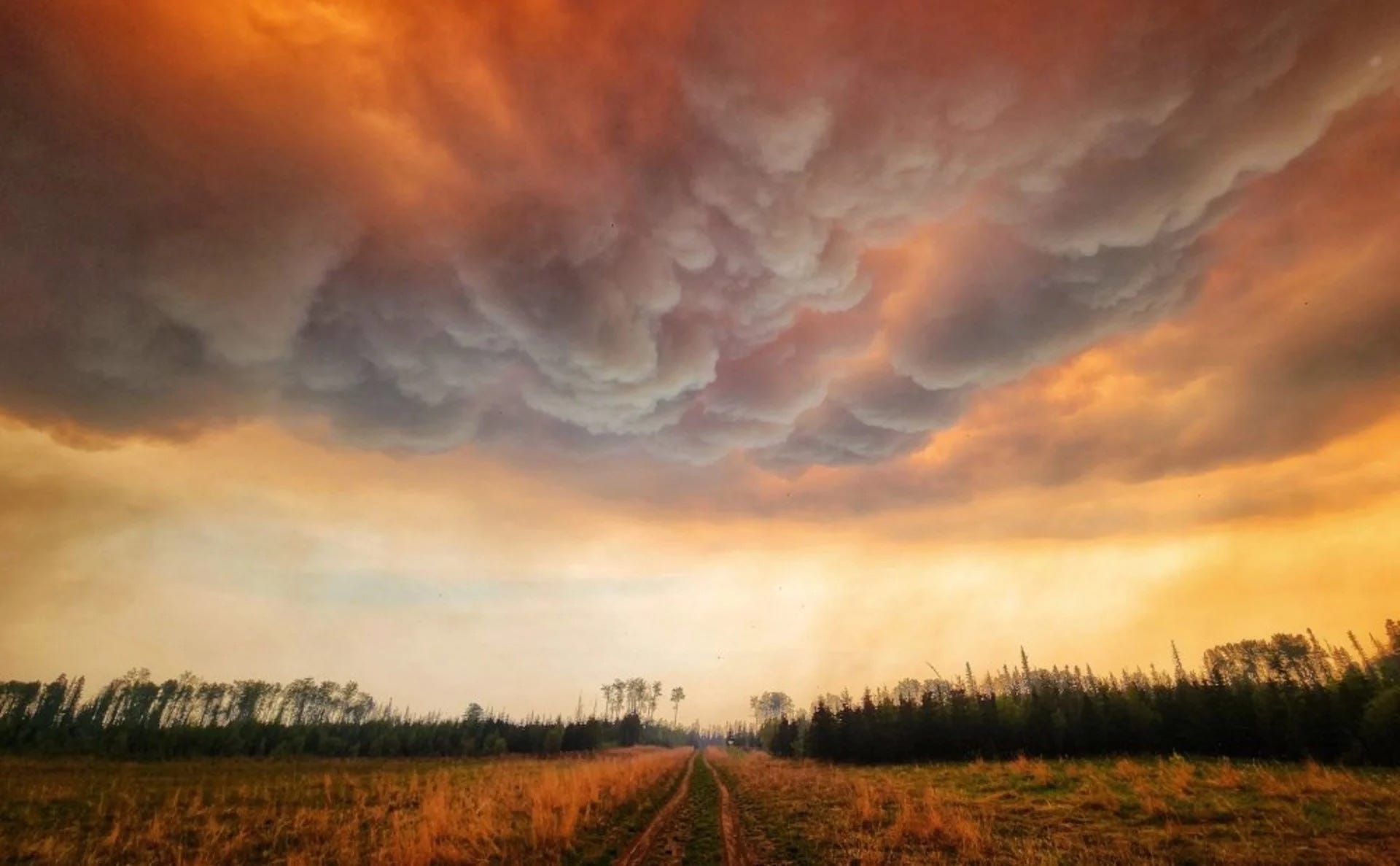
The sky outside my window is white with smoke. Not cloud-white. Smoke-white. The fires burning in Colorado and Wyoming have been burning since August. The wind carries the smoke here, turns the sun red, makes the light strange and apocalyptic.
Trump will not fix this. Trump does not believe in this. Trump will call it a hoax while the West burns, will blame Democrats while the aquifer drops, will promise solutions while accelerating extraction.
We know this. We knew this in 2016 and we know it now. The question is not what Trump will do. The question is what we will do. Whether we will manage ourselves into silence or whether we will refuse to be managed.
I worked in finance for thirty years. I was never manageable. This made me difficult to work with. This made me the one who asked the wrong questions, pointed out the wrong things, refused to accept the wrong answers.
There were things you did not say. A deal would come through,a deal that moved money from pension funds to private equity, from public goods to private profit, from the many to the few,and we would structure it. Most people would not question it. Would not name what we were actually doing or examine who would pay the cost.
I questioned it. Every time. Not because I thought it would change anything. Because I could not not question it. Because being manageable in finance required a kind of self-deception that I have never been able to master. Required calling extraction “value creation.” Required calling theft “optimization.” Required calling the systematic impoverishment of communities “market efficiency.”
This made me unpopular. This cost me promotions, opportunities, friendships. This marked me as someone who could not be trusted to go along, to be part of the team, to understand how things work.
But I kept my voice. This is what Trump cannot take from me. This is what he cannot take from anyone who refuses to trade their voice for his approval or his access or his promise not to hurt them.
Under Trump’s second term, the pressure to be manageable will be enormous. The threats will be real. The consequences will be real. People will lose jobs. People will lose security. People will be targeted for speaking up.
This is when it matters most to refuse to be managed. Not because refusing will prevent the consequences,it will not prevent the consequences. Because being manageable under autocracy is not safety. It is collaboration. It is complicity. It is the slow surrender of everything that makes resistance possible.
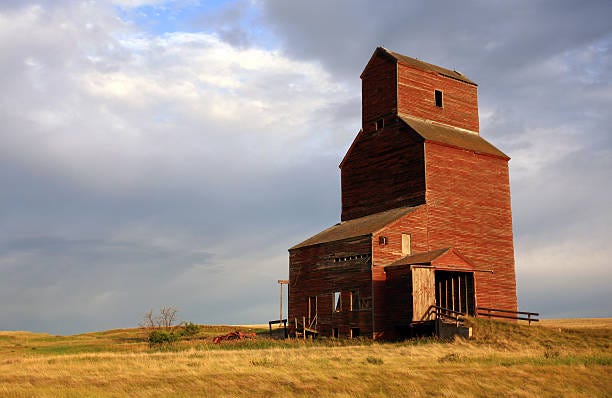
There is a photograph on my desk. My father in 1968, standing in front of the grain elevator that is no longer there. The sky behind him is the color of iron. A storm is coming. You can see it in the quality of the light, in the way the air looks thick enough to touch. He is looking beyond the camera, beyond the town, beyond everything.
My father was not afraid of anything. But he believed the system could be made to work if good men stayed inside it and did the right thing. He believed in working within the structure. He believed that patience and persistence and playing by the rules would eventually result in justice.
The system did not work. The grain elevator is gone. The farm is gone. Everything he built is gone. Not because he was not a good man or did not work hard or did not play by the rules. Because the system was designed to extract everything it could and move on.
Trump is not an aberration of the system. Trump is what the system produces when you strip away the pretense. When you stop pretending that the extraction is for the common good. When you stop using euphemisms like “creative destruction” and “market forces” and just call it what it is: taking.
I am my father’s son. I inherited his fearlessness. But I did not inherit his faith in the system. I have never had faith in the system. This is not cynicism. This is observation. This is paying attention to what the system actually does rather than what it claims to do.
The system is designed to make us manageable. Trump understands this instinctively. He does not need to create the machinery of management,it already exists. He just needs to use it more openly, more brutally, without the polite fictions that previous administrations maintained.
Let me tell you what has happened since January. Not the spectacular things. Not the executive orders or the rallies or the Twitter posts. The quiet things. The ways people have made themselves manageable without being told to.
Journalists softening their language. Calling lies “misstatements.” Calling corruption “ethical concerns.” Calling fascism “populism” because fascism is too strong a word, too inflammatory, too likely to provoke accusations of bias.
Elected officials moderating their criticism. Calculating what they can safely say. Choosing their battles. Telling themselves they are being strategic when what they are actually being is afraid.
Activists lowering their voices. Planning for the long game. Talking about sustainability and avoiding burnout. These are reasonable concerns. These are also ways of managing yourself into ineffectiveness.
I have watched this my entire life. The machinery of self-censorship. The ways people learn to silence themselves before anyone has to silence them. The ways resistance becomes performance, becomes acceptable, becomes manageable.
Trump does not fear manageable resistance. Trump welcomes manageable resistance. Manageable resistance makes the system look democratic, look responsive, look like it is still working. Manageable resistance is the release valve that prevents unmanageable resistance.
What Trump fears,what any autocrat fears,is people who refuse to calculate consequences. People who say what they see while they see it. People who will not soften their language or moderate their criticism or wait for the right moment.
People who are not afraid and therefore not manageable.
My eyes are not what they were. I need reading glasses now, strong ones, and the print blurs if I read too long. Presbyopia, my doctor calls it. Common enough. She mentions it the way you mention weather, as if losing the ability to see clearly is just another unremarkable fact of aging.
Some days the words swim on the page. I write anyway because the alternative is silence and I have never been silent. Because waiting for perfect conditions is another form of self-management. Because the wound is now and the writing is now and there is no guarantee of later.
This is what unmanageable resistance looks like. Not perfect. Not strategic. Not calculated for maximum effectiveness. Just refusing to be silent. Refusing to wait for ideal conditions. Refusing to manage yourself into ineffectiveness.
You are younger than I am. Your eyes are sharper. You have energy I no longer have. You have time I no longer have. You have decades I will never see.
This is why you terrify them.
Not me. Not the old man in Nebraska writing essays that a few thousand people will read. You. The ones who are just beginning. The ones who have not yet learned to be afraid. The ones who have not yet accepted that fear is reasonable, that calculation is prudent, that managing yourself is how you survive.
You are the ones who can end this. Not through violence. Not through burning it all down. Through the simple refusal to participate in your own silencing. Through the recognition that their power is not real power,it is borrowed power, power you loan them through your fear, power they can only exercise if you agree to be managed.
People will tell you this is not smart. That you need to pick your battles. That you need to think about the long game. That burning yourself out serves no one. These are all true things. These are also things that autocrats count on,that people will manage themselves, will moderate themselves, will silence themselves in the name of sustainability.
The long game assumes there is a long game. The long game assumes the system is still functioning, that elections still matter, that resistance can wait for the right moment. Trump is betting that there is no long game. That by the time people stop being manageable, the machinery of management will be too entrenched to resist.
Let me tell you what I mean by unmanageable resistance. Not the organized kind. Not the kind with five-point plans and strategic messaging and carefully calibrated responses. The kind that simply refuses.
Refuses to soften the truth. Refuses to use euphemisms. Refuses to pretend that what is happening is normal or acceptable or within the range of democratic politics. Refuses to calculate whether speaking will be effective before speaking.
A few weeks ago Stephen Miller called people on the left “domestic terrorists.” This is not new language for him. This is the language of dehumanization, the language that precedes state violence, the language that turns dissent into criminality and opposition into treason.
I posted flippantly: “I am a domestic terrorist”.
I meant it as defiance. As refusal to be cowed by their language. As the kind of unmanageable response that says: you cannot threaten me into silence, you cannot make me afraid of your labels, you cannot manage me through intimidation.
But I took it down. A day later, maybe two, I deleted it.
Not because I was afraid. Because I was being stupid. Because unmanageable resistance is not performative defiance. It is not adopting their language ironically. It is not giving them ammunition they will use against you and everyone who looks like you or thinks like you or stands where you stand.
Unmanageable resistance is saying clearly what they are doing. Naming the tactic. Explaining the purpose. Refusing to let it work.
Unmanageable resistance is saying: Stephen Miller is using the language of domestic terrorism to criminalize dissent. He is doing this to justify state violence against opposition. He is doing this because dehumanizing language precedes dehumanizing action. This is how genocides begin. This is how autocracies consolidate power. This is happening now.
Not: I am a domestic terrorist, wink wink.
But: They are calling us terrorists because they intend to treat us as terrorists, and we need to name this clearly and prepare accordingly.
This is the difference. Unmanageable resistance requires precision. Requires saying exactly what is happening without softening it and without making it easier for them to dismiss or weaponize. Requires understanding that their language is not a game and responding to it seriously, clearly, without irony or performance.
Unmanageable resistance is saying: Trump is a fascist. Not “has fascist tendencies.” Not “employs fascist rhetoric.” Is a fascist. Is attempting to dismantle democratic institutions. Is targeting vulnerable populations. Is using the power of the state to enrich himself and punish his enemies.
These are not opinions. These are descriptions. But we have been trained to treat descriptions as opinions, to soften factual statements into debatable claims, to manage our own language so that we cannot be accused of bias or hyperbole or Trump Derangement Syndrome.
This is exactly what Trump wants. The softening. The hedging. The self-management. Because once you start managing your language, you start managing your thoughts. Once you start calculating what you can safely say, you stop seeing clearly what is actually happening.
I refuse to manage my language. I have never managed my language. Trump is a fascist. His administration is corrupt. His policies are designed to extract wealth and concentrate power. His rhetoric is designed to dehumanize and target vulnerable populations. These are facts, not opinions, and refusing to state them clearly is complicity.
There is a phrase I keep hearing: “We can’t keep doing this.” People say this about outrage, about resistance, about the constant vigilance required to pay attention to what Trump is doing. They say we need to take breaks, need to protect our mental health, need to find sustainable ways to resist.
These are reasonable concerns. Burnout is real. Exhaustion is real. The toll of constant attention is real.
But “we can’t keep doing this” is exactly what Trump is counting on. That we will exhaust ourselves. That we will decide that vigilance is unsustainable. That we will retreat into private life and let him do what he wants as long as he leaves us alone.
This is how autocracy completes itself. Not through spectacular repression but through exhaustion. Through making resistance so costly, so draining, so unrewarding that people simply give up. Through making the normal functioning of democracy so exhausting that people trade their freedom for rest.
So let me tell you what I tell myself on the days when the exhaustion feels terminal, when the thought of writing one more essay or making one more call or showing up to one more meeting feels impossible.
I am not afraid and therefore I am not manageable.
Say it. Out loud. Right now. I am not afraid and therefore I am not manageable.
Not because it makes the fear disappear. Because it reminds you that fear is a choice, that being managed is a choice, that you can choose differently. Because it reconnects you to the part of yourself that knows,has always known,that compliance is not safety, that silence is not peace, that managing yourself to avoid their anger is not survival, it is slow death.
I am sixty-six years old. I do not know how much time I have left. Maybe twenty years. Maybe two. The math is not encouraging and I have never been good at lying to myself about math.
But I am not tired. I am not burned out. I am not interested in sustainability or self-care or any of the language we use to justify retreat. I am interested in using whatever time I have left to refuse. To name what is happening while it is happening. To write it down clearly and without apology so that no one can claim later that we did not know, that we did not see, that we could not have predicted this.
You have more time than I do. Use it. Not carefully. Not strategically. Not in ways that preserve your energy for some imagined future moment when resistance will be easier or safer or more likely to succeed.
There is no such moment. There is only now. There is only the choice between being managed and refusing to be managed. There is only the question of whether you will spend your one wild and precious life calculating consequences or whether you will speak as if you are already free.
I pour another cup of coffee. I light another cigar.
This is how we beat Trump. Not through strategy or messaging or careful calculation of consequences. Through refusing to be afraid. Through refusing to be managed. Through understanding that he has no power except the power we give him through our fear.
You write like fire. You write like the walls are closing in because the walls are closing in. You write like time is running out because time is running out. You write without hedge or qualification or the careful navigation of other people’s comfort.
You write: Trump is a fascist. You write: His administration is corrupt. You write: His policies are killing people. You write: We are running out of time.
The letters form on the page. Some days steady. Some days less so. But they form. The words accumulate. The record grows. This is what unmanageable resistance looks like in practice,not the grand gesture, not the dramatic confrontation, but the daily refusal to be silent, the accumulated weight of ten thousand small acts of defiance, each one saying: I see what you are doing and I will not pretend I do not see it.
Trump fears this. Not because it will defeat him tomorrow or next week or next month. Because it cannot be controlled. Because it cannot be co-opted. Because it cannot be exhausted into surrender or threatened into silence or bought into complicity.
Because once you stop being afraid, once you stop managing yourself, once you recognize that their power is just borrowed fear and you can stop loaning it to them,they have nothing. No defense. No response. No way to make you comply except through force, and force is expensive, force is visible, force is the admission that management has failed.
I am not afraid and therefore I am not manageable. This is not just my freedom. This is the template for everyone’s freedom. This is the crack in the foundation of autocracy. This is how systems of control collapse,not from external pressure but from internal refusal, from the moment when enough people simply stop participating in their own oppression.
Not because I think it will change everything. Not because I think Trump will read this and resign. Because being manageable under autocracy is not safety. It is collaboration. It is complicity. It is the slow surrender of everything that makes resistance possible.
The aquifer is dropping. The climate has changed. The towns are dying. The fires are burning. Trump is president. These are facts, not metaphors. These are things that are happening right now, that have been happening, that we have been pretending are not happening because seeing clearly would require us to act, and action requires refusing to be manageable.
I write it down. All of it. While I still can. While my hands can still hold the pen and my eyes can still see the page and my mind can still form the words that need to be said.
Set the world on fire, they say. But the world is already on fire. The question is whether you are going to spend whatever time you have left pretending it is not burning, or whether you are going to write it down clearly and without mercy, so that when it is over,when you are over,there will be at least this: a record of what you saw, what you knew, what you refused to pretend you did not see.
I am not afraid and therefore I am not manageable. This is the only freedom left. This is how we beat him.
This kind of writing,unmanageable, uncompromising, refusing to soften the truth,takes time and costs something to produce. If this work matters to you, if you believe that someone needs to keep writing without calculating consequences, consider becoming a paid subscriber. Your support makes it possible to keep doing this without managing myself into silence or moderating myself into irrelevance. It’s not about sustainability. It’s about whether this voice continues to exist or not.
I needed this today. Running for school board and in a very red city with no backing from a political party. It’s tough but I’m fighting for my kids future
Perfectly said. We need to back up the "soft" side of the resistance (non-compliance) with its counterpart: economic action through disengagement. People need to opt-out, in as many ways as possible. This will be more powerful than any other act.