

The Receipts
What 148 Automated Responses Taught Me About Power

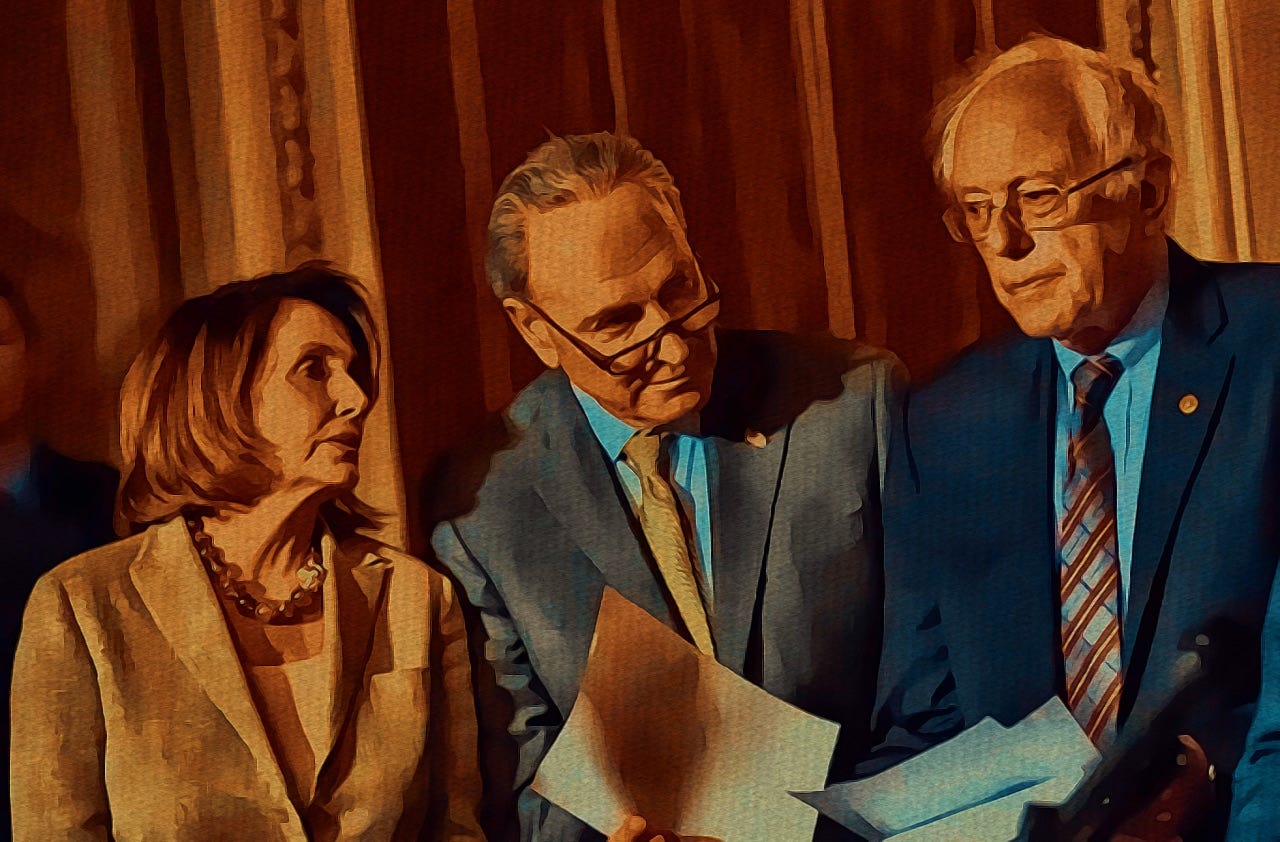
Congress has a 15% approval rating.Nancy Pelosi announced her retirement at 85.She got to choose when.
Her husband bought Microsoft call options on March 19, 2021. Twelve days later the Army announced a $22 billion contract with Microsoft. Whether this timing was coincidence or not, it was legal.
That’s the problem.
I live in western Nebraska. Population: 14,323. Median household income: $53,448. Distance to Washington: 1,085 miles. I have never been to Room 2128 of the Rayburn Building where these decisions get made. I never will be.
But I pay for it.
Sometimes I look up these rooms on Google Images. Room 2128. The brass nameplate. The walnut paneling. The beige carpet. I study the photographs the way you might study photographs of a place you’ll never visit but that determines your life anyway.
Patricia says I’m obsessed with rooms I’ll never enter. Maybe I am. But someone should be looking at these rooms. Someone should be watching what happens in them.
She’s not wrong to worry. Some nights I’m at the kitchen table until two in the morning, reading committee transcripts, cross-referencing voting records with donor lists. She brings me coffee and says nothing. In the morning she asks if I slept at all. I tell her a few hours. She knows it’s less.
“You can’t fix this from Nebraska,” she says. Not unkindly. Just stating what’s true.
“Someone has to watch them,” I say.
“You think they care that you’re watching?”
I don’t have a good answer for that.
The Automated Response
In the first three months of 2025, 259 farms went bankrupt nationwide, with Nebraska among the hardest hit. According to CDC data, farmers are 3.5 times more likely to die by suicide than the general population.
During the 2023-2024 drought, one of the most severe in decades, my congressman held no town halls. Adrian Smith. Eighteen years in office. His website has a contact form that generates an automated response.
I used it once. Selected “Agriculture” from the dropdown menu. Typed three paragraphs about irrigation schedules and crop insurance. Pressed submit.
The reply arrived in less than two minutes: “Thank you for contacting my office. Your input is important to me.”
The speed of the response is how you know.
Room 2128
March 29, 2023. I watched C-SPAN footage of Jamie Dimon testifying about the banking crisis. Silicon Valley Bank had just collapsed. Signature Bank had just collapsed.
Maxine Waters asked questions,detailed, technical, informed. She has been on the House Financial Services Committee since 1991. Thirty-four years.
Dimon answered,polite, measured, opaque. At no point did anyone seem angry. At no point did anyone seem surprised. Everyone knew their lines. The hearing lasted four hours and six minutes.
Nothing changed.
This is what kills me. Not that they’re corrupt, though some are. What kills me is that they’ve been doing this so long they’ve forgotten how to be angry. Waters has been on this committee for thirty-four years. Thirty-four years of asking informed questions and getting opaque answers. Thirty-four years of watching banks get bigger and regulations get weaker.
At some point, does the performance become the point? Does asking the right questions become a substitute for getting the right answers?
Room 2128 of the Rayburn House Office Building. Brass nameplate outside, worn smooth from people running their fingers across it. Chrome push bars on the doors. Fluorescent lights that hum. Walnut paneling. Beige carpet. The 1965 aesthetic that no one has bothered to update.
French Hill chairs this committee now. Republican from Arkansas. But Maxine Waters is still there. Still the ranking member. Still asking informed questions. Still watching nothing change. She’s eighty-six years old.
The financial industry doesn’t need to win arguments anymore. They just need to outlast the people making them. Wait for them to get tired. Wait for them to mistake exhaustion for wisdom. Wait for them to learn which fights have already been lost.
Waters knows how the system works. She’s mastered it. She’s become it.
Congress has a 15% approval rating.
What the System Teaches
I used to think people went to Washington and got corrupted. That good people went bad. But it’s simpler than that. The system just teaches you what you need to believe to stay in it.
Think about what it takes to rise to leadership in the Democratic Party: decades of relationship-building with donors, mastery of procedural rules that allow bills to die quietly, the ability to count votes before they’re cast so you never have to cast votes that would anger donors, skill at explaining why popular policies can’t pass, the discipline to perform opposition while ensuring nothing fundamentally changes.
These are the skills the system selects for. These are the skills that get you to leadership. And these are the exact skills that make reform impossible.
Alexandria Ocasio-Cortez was elected in 2018. She’s thirty-five years old. She primaried Joe Crowley, who’d been in Congress since 1999, who was fourth in Democratic leadership, who everyone said was unbeatable. She beat him anyway.
Then she arrived in Washington and the system began teaching her.
Not through explicit lessons. Through incentives. Vote with leadership: better committee assignments. Raise money for the DCCC: support for your legislation. Play the game: you build power. And the game works. You do build power. You do get things done. Small things. Incremental things. Things that matter but that aren’t what you came to do.
And slowly,so slowly you might not notice,you become someone who knows how to navigate the system. How to work within its constraints. How to be effective within the boundaries of what’s possible. You become good at your job. Just not the job you thought you were there to do.
This is not corruption in the traditional sense. This is learning.
H.R. 1
January 2021. Democrats controlled the House, the Senate, and the White House for the first time in a decade.
The House passed H.R. 1, the For the People Act. 791 pages. Automatic voter registration. Expanded early and mail-in voting. Presidential candidates would have to disclose tax returns. Independent redistricting commissions to end gerrymandering. Limits on dark money. Disclosure requirements for major donors.
Everything Democrats said they wanted.
The House passed it 220-210. Every Democrat voted for it. Every Republican voted against it.
Joe Manchin killed it. Not by voting against it. By writing an editorial in the Charleston Gazette-Mail on June 6, 2021, saying he would vote against it. The bill died in the silence between debate and vote. The filibuster requires sixty votes to end debate. Democrats had fifty.
The bill was never voted on. It just stopped existing.
Nancy Pelosi knew the bill was dead before the House voted. She’s been in Congress since 1987. Thirty-eight years. Chuck Schumer knew too. In Congress since 1981. Forty-four years.
They all knew. This is what institutional memory produces: the ability to count votes before they’re cast. The ability to understand that some votes will never be cast at all.
Patricia asks me sometimes why I care so much about a bill that wouldn’t have changed anything here. “Our polling place is the community center. Takes ten minutes to vote.”
“It’s not about us,” I say.
“I know,” she says. “But you act like it is. Like you’re the one being cheated.”
Maybe I do. But someone has to be angry. The people in Washington have been there too long to remember how.
The Numbers
Members of Congress stay in office because they get rich.
In 2024, Democratic lawmakers’ portfolios were up 31%. Republican portfolios were up 26%. The S&P 500 was up 24.9%. This happens year after year. Members of Congress consistently outperform the market. They outperform professional investors. They outperform hedge funds.
Nancy Pelosi doesn’t trade stocks personally. Her husband does. This distinction seems important to her.
Josh Gottheimer is a Democratic congressman from New Jersey. In 2024, he held $96 million in investments. His congressional salary is $174,000 per year. He traded $22 million in stock from the top 100 Pentagon contractors while serving on the House Intelligence Committee,the committee that receives classified briefings about defense contracts, military operations, and national security threats.
$96 million in investments on a $174,000 salary.
Multiple bills have been proposed to ban congressional stock trading outright. Alexandria Ocasio-Cortez introduced one. Abigail Spanberger introduced one. Raja Krishnamoorthi introduced one.
None reached a vote.
Nancy Pelosi opposed a ban on congressional stock trading until January 2022, when polling showed 76% of Americans wanted it. Then she said she supported a ban.
Then nothing happened.
Joe Biden called for a ban on congressional stock trading in December 2024. After forty-seven years in public office. On his way out.
You call for reform when you’re no longer in a position to achieve it. This allows you to be on the right side of the issue without the inconvenience of actually having to change anything.
What Mastery Means
I want to be clear about something. I respect these people.
Nancy Pelosi’s legislative skill is extraordinary,she passed the Affordable Care Act when everyone said it was impossible. Chuck Schumer has held a fractious caucus together through impossible circumstances. Elizabeth Warren has been one of the fiercest advocates for financial regulation we’ve had. Bernie Sanders moved the entire party left on healthcare and economic policy. Maxine Waters has fought for housing rights and against predatory lending for decades.
They’ve done real things. Important things. Things that mattered to millions of people.
And yet.
Nancy Pelosi announced in November 2025 that she will retire in January 2027. After forty years in Congress. She didn’t leave because the system term-limited her out. She’s leaving because she chose to. At 85 years old. After decades of accumulating power, of mastering the institution, of becoming the institution.
The question isn’t whether these leaders have been effective within the system. They have been. The question is whether the system itself,the one they’ve mastered, the one they’ve become,is producing the outcomes we need.
That’s the thing about mastery. You get so good at working within constraints that you forget the constraints are choices. You mistake the boundaries for laws of nature. You become effective at operating within a system that doesn’t work, and you call that success.
When people say “institutional memory,” they mean knowledge of how to work within the system. How to get bills through committee. How to negotiate with leadership. How to compromise with Republicans.
The institution has perfect memory. The institution remembers every procedural rule, every precedent, every technique for getting things done.
What the institution doesn’t have: universal healthcare. Affordable housing. A living wage. Climate policy equal to the crisis. Immigration reform. Campaign finance reform. Any of the things Democrats have been promising for my entire adult life.
What we’ve been calling stability is actually stasis. What we’ve been calling expertise is actually knowing which donors to protect. What we’ve been calling institutional memory is actually remembering which fights you’ve already lost so you don’t waste energy fighting them again.
The 2024 Election
In 2024, Donald Trump won the popular vote. 49.8% to 48.3%. First time a Republican has done that since 2004.
He won it while running on chaos. Running on burning everything down. Running explicitly against the system, against the establishment, against the way things work in Washington.
The Democratic Party ran on protecting the system. Preserving norms. Defending institutions. Maintaining stability.
Voters were offered a choice between maintaining a system that isn’t working and destroying a system that isn’t working.
They chose destruction.
Patricia and I argue about this sometimes. She thinks I’m too harsh. “They’re trying,” she says. “Within the system they have.”
“The system they have is the system they chose,” I say.
“So blow it up then. That what you want?”
“I want them to want to blow it up.”
She looks at me for a long moment. “No you don’t. You want them to be as obsessed as you are. And they’re not. They can’t be. They’re in it.”
“Then they shouldn’t be in it.”
“And who replaces them? You?”
I don’t have an answer for that. We both know I’m not going anywhere. That’s not what this is about.
The Problem That Cannot Be Solved
You cannot fix a system using the people the system selected for.
The people with the power to change the Democratic Party are the people who got that power by learning not to change it. They rose to leadership by mastering the rules. By building relationships with donors. By learning which fights to avoid. By perfecting the performance of opposition while ensuring nothing fundamentally changes.
Nancy Pelosi announced her retirement at 85. Not because the system forced her out. Because she chose to. After forty years. She gets to decide when she’s done. Not the voters. Not the party. Her.
This is how systems protect themselves. Not through explicit rules but through the people they elevate. The Democratic Party elevates people who are good at navigating the Democratic Party. And people who are good at navigating the Democratic Party are people who have learned which fights not to fight. Which donors not to anger. Which reforms not to attempt.
87% of Americans support congressional term limits.
Congress has a 15% approval rating.
There are solutions to this. Term limits are one.
Not perfect. The problems are obvious: a member with four years and no reelection has every incentive to chase headlines instead of legislation. Why spend months negotiating compromise when you could introduce Medicare for All, force a vote, watch it fail, and build a national profile for your post-Congress career? We’d get more theater, more grandstanding, more viral moments instead of actual governance.
Except that’s exactly what we have now. Just slower. Just with better disguises.
Maxine Waters asking informed questions that change nothing for thirty-four years is theater. Democratic leadership passing H.R. 1 knowing it will die in the Senate is theater. Committees holding hearings where everyone knows their lines and nothing changes is theater. The current system has perfected the performance of opposition while ensuring nothing threatens the donors.
Term limits would create chaos. Inefficiency. Members who don’t know the rules well enough to work within them. Members who waste time on impossible fights. Members who flame out trying to change things that can’t be changed.
Good.
Let them not know the rules. Let them not understand which fights are already over. Let them force votes that aren’t supposed to happen. Let them be naive enough to actually try.
The choice isn’t between the current system and something perfect. The choice is between a system that’s optimized for perpetuating itself and a system that’s too unstable to calcify. Between institutional memory that remembers how to kill reform and institutional chaos that occasionally forgets to.
I’ll take the chaos.
What I Keep
From western Nebraska, 1,085 miles from where these decisions get made, I watch this happen. Watch the Democratic Party lose to fascism while its leaders get rich. Watch them explain that what we need is better messaging, younger faces, more effective communication of the same donor-approved policies.
Room 2128 of the Rayburn Building. I keep coming back to this room. The brass nameplate worn smooth. The beige carpet. The fluorescent lights. The place where Maxine Waters has been asking informed questions for thirty-four years while banks get bigger and nothing changes.
The automated response from my congressman’s office is still in my inbox. I keep all of them. A folder titled “Correspondence” with 147 automated replies spanning twelve years.
Patricia saw it when she was using my laptop last week. “You keep all of these?”
“Yes.”
“Why?”
I didn’t have a good answer then. Still don’t. Just that someone should be keeping track. Someone should be watching. Even if,especially if,no one is watching back.
Last week I wrote another letter. This one about commodity prices and the farm bill. Selected “Agriculture” from the dropdown menu again. Typed four paragraphs. Pressed submit.
The response arrived in 118 seconds: “Thank you for contacting my office. Your input is important to me.”
I added it to the folder. Number 148.
Patricia found me at the kitchen table past midnight, the laptop screen bright in the dark. “Come to bed,” she said.
“In a minute.”
“That’s what you always say.”
She stood there watching me scroll through the folder. All those automated responses. All those identical sentences thanking me for input that was never read.
“What are you doing?” she asked. Not angry. Just tired.
“Making sure there’s a record,” I said. “That someone was watching. That someone said something.”
“Even though nothing changes?”
“Especially because nothing changes.”
She put her hand on my shoulder. Squeezed once. Went to bed.
I’m still here. Still writing letters to people who don’t read them. Still studying rooms I’ll never enter. Still counting things no one else is counting.
Not because I think it will change anything.
Because someone needs to remember we saw this happening. Someone needs to have kept the receipts. Someone needs to be able to say: we told you, and you didn’t listen, and here’s proof we told you.
The automated responses keep coming. I keep saving them.
That’s all this is now. That’s all it’s ever been.
Documentation for a trial that will never happen.
If this kind of work matters to you, consider becoming a paid subscriber.
This piece took weeks. Not the writing,that took days. The weeks were spent cross-referencing voting records with donor lists, reading committee transcripts until 2 AM, tracking down the specific details that make the difference between a rant and documentation. The brass nameplate in Room 2128. The 118 seconds it took to get an automated response. The exact date Paul Pelosi bought those Microsoft call options.
Most political writing asks you to be outraged. I’m asking you to pay attention to what the outrage is actually about. To understand why the system can’t reform itself. To see the incentive structures that make change impossible even when everyone says they want it.
Paid subscribers make this possible. They let me spend weeks on a single piece instead of chasing clicks. They let me write 6,000 words when the algorithm wants 800. They let me document what’s happening in rooms I’ll never enter, from a place 1,085 miles away from where decisions get made.
For $8/month or $80/year, you get:
Every piece before anyone else sees it
Access to the full archive of documented research
The ability to comment and push back when I’m wrong
The knowledge that someone out here is still counting
Congress has a 15% approval rating. Nancy Pelosi just retired at 85 after choosing her own exit date. Her husband’s portfolio was up 54% last year. None of this is secret. All of it is legal. Someone needs to keep the receipts.
I’m asking for $8 because this work can’t be free.
I’m seeing this as transmission failure. 435 House seats and 33 Senate seats are in play this November. Since it’s unlikely that buying a whole new car will be feasible, it’s time to rebuild the transmission. Get rid of the old broken parts and put some new ones in.
I’ve been rewatching “The West Wing” on Netflix. In the first season, episode 20, the President’s approval numbers are in the cellar, and Congressional leaders in his own party are leaning on him to take positions on issues he fundamentally is (and was) opposed to, in order to protect “everyone’s” professional status and in the interests and “party unity.” This leaning also comes with threats to the continuance his administration, of course.
It an episode that reminded me of how political learning gets in the way of advocating for and acting on behalf the people.
I watched it with tears in my eyes and disillusion (recognition) in my heart, only two nights ago. Your essay this morning only drove the nail in deeper. If you haven’t watched it recently, I urge you to give it a look.