

Nobody Knows Their Names
ICE agents have opened fire nine times since September. Renee Good is the only victim we're talking about. What happened to the other eight?

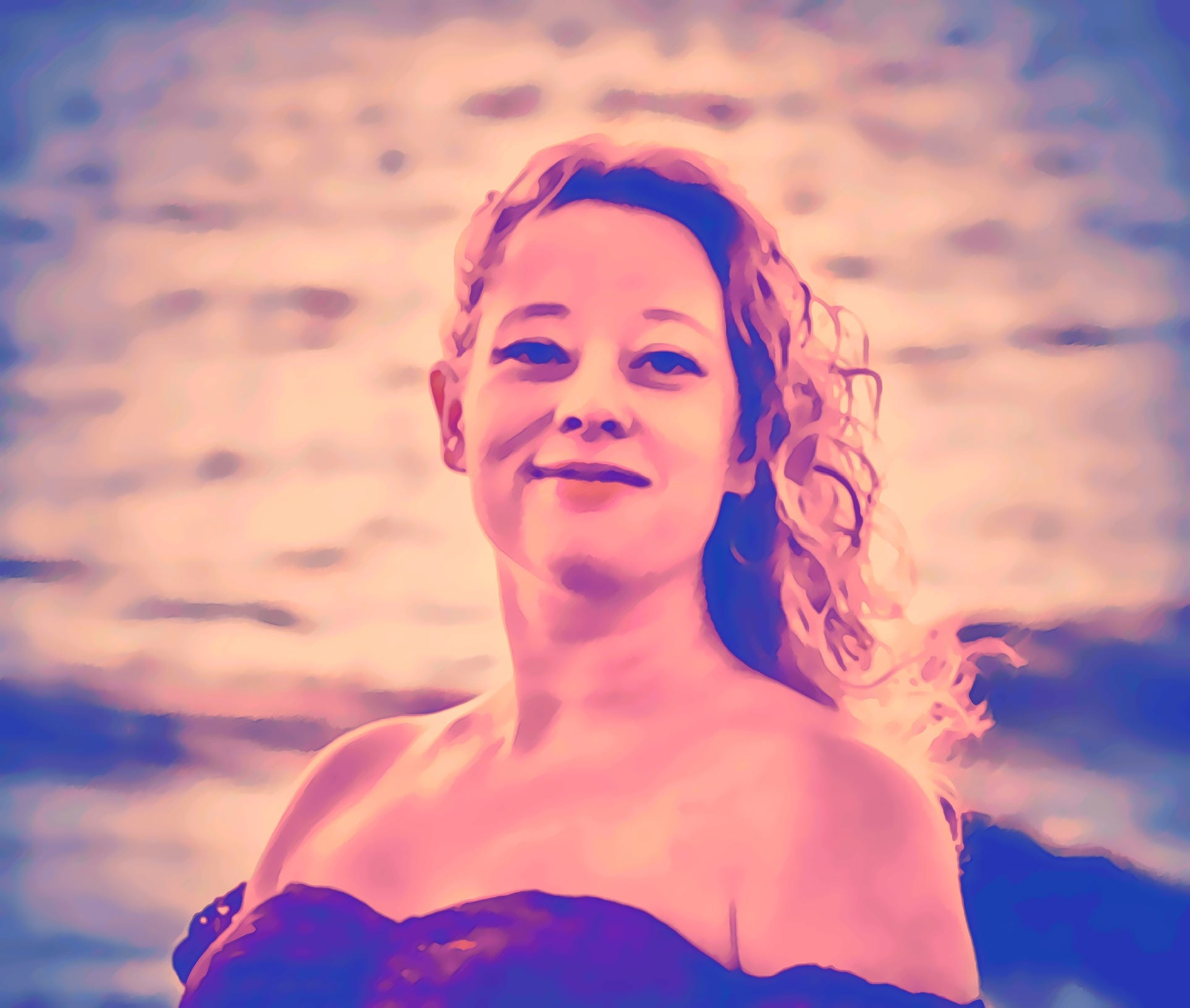
Her last words were “That’s fine, dude, I’m not mad at you.”
Then the ICE agent shot her.
Renee Good is the ninth person federal immigration agents have shot since September. She’s the only one whose name you know. She’s the only one we’re talking about.
I tried to find the other eight.
Can you name any of them?
I couldn’t either. So I spent two days trying.
I started with Google: “ICE shooting September 2025.” Then “ICE agent involved shooting fall 2025.” Then “immigration enforcement shooting 2025.” Pages of results about Renee Good. A few older cases from previous years. Nothing about the other eight.
I tried news databases. Filtered by date range, searched for “ICE” and “shooting” and “federal agent.” Found three brief mentions in local papers,an “officer-involved shooting” in Phoenix on March 18th, an “incident during enforcement operation” in Houston, something in Los Angeles that was described only as an “altercation.” No names. No details. No follow-up coverage.
I went to ICE’s own press releases. Found the one about Renee Good,minimal, defensive, claiming she “posed an imminent threat.” Searched their archives for other shootings. Found standard language about “use of force incidents” with dates and cities sometimes included, sometimes not. Nothing that would let you connect a date to a person to a story.
Two days of searching to learn what the absence itself means: if you want to know who federal agents killed, you need to file FOIA requests that take months and come back redacted, or you need access to legal proceedings that haven’t started yet, or you need a family member to go public and a video to go viral and a city to care enough to demand answers.
Without those things, you’re just a number. An “incident.” A line item in a report nobody reads.
Number four: Phoenix, March 18th. “Incident during enforcement action.” That’s all I could find.
Who were they? Were the agents cleared? Are they still on duty? Did their victims also say “That’s fine, dude, I’m not mad at you” before they died, or did they scream, or beg, or say nothing at all because the bullet came too fast?
We don’t know their names. We haven’t seen their videos. Their families didn’t raise $1.5 million. Their mayors didn’t hold press conferences. They were just numbers one through eight.
And Renee Good, the poet and mother of three killed in her Minneapolis driveway, is number nine.
This is not about Renee Good. Or rather, it’s not only about her. Because what happened to her, stripped of the videos and the outrage and the GoFundMe, is that she became a number in a count that most of us don’t even know we’re keeping.
She had everything the story needed. Video. Contradictions in the official account. A sympathetic victim: educated, a poet, a mother, a U.S. citizen who shouldn’t have been anywhere near an immigration raid. Perfect timing: dropped into the middle of the largest immigration operation in regional history, schools closing, National Guard deployed. A villain clearly defined: JD Vance claiming immunity, the FBI shutting out local investigators.
It’s a perfect story. The kind that goes viral. The kind that makes us feel something.
And that feeling,that’s the problem.
Because while we’re feeling it, while we’re watching the videos and reading the tributes and arguing about whether she was “weaponizing her vehicle” or just a terrified woman who didn’t want to get out of her car, the number keeps going up.
Nine becomes ten. Ten becomes eleven.
The system doesn’t stop for grief. It doesn’t pause for investigation. It certainly doesn’t slow down for outrage.
The System Working
Two thousand agents don’t descend on Minneapolis by accident. That’s not a raid. That’s an occupation. That’s a message.
Look at the numbers: Operation Secure Cities deployed 2,000 agents to Minneapolis over three days. For comparison, the largest ICE operation in Texas last year,a state with ten times the undocumented population,used 400 agents over two weeks. When DHS conducted enforcement in Phoenix, a city with documented sanctuary policy violations, they sent 300 agents. Minneapolis got 2,000.
Minneapolis, which declared itself a sanctuary city. Minneapolis, which sued the federal government over immigration enforcement in 2024. Minneapolis, which voted 72% for Harris. The calculus isn’t subtle.
When DHS decides to conduct an operation of this scale, it’s not responding to some emergency. It’s a demonstration. A show of force. Stephen Miller explicitly described the strategy in a December interview: “We will focus our resources on jurisdictions that have obstructed federal law enforcement.” This is cruelty as policy, the “shock and awe” approach to immigration enforcement that was promised during the campaign and is now being delivered with military precision.
The message is: we can do this anywhere, anytime, and you can’t stop us. Your mayor can swear at us. Your governor can go quiet because own problems have just about ended his political career. Your community can protest. None of it matters.
And when someone dies in the middle of that demonstration, the protocol is clear. JD Vance goes on television and claims immunity for the agents who just killed a U.S. citizen in her driveway. The FBI immediately shuts out local investigators. Not because federal jurisdiction requires it,local and federal authorities cooperate constantly,but because they can. Because the message needs to be clear: Minneapolis doesn’t get to investigate what happened in Minneapolis.
Immediate claim of self-defense. Federal investigation that excludes local authorities. Invocation of immunity. Wait for the news cycle to move on. Repeat.
It’s not broken. It’s working exactly as the architects intended.
She Saw It Coming
Here’s the thing about Renee Good that everyone’s missing: she left. After Trump won in 2024, she packed up her family and moved to Canada. She looked at what was coming and she got out. Then she came back.
Why? Maybe she missed home. Maybe she thought it wouldn’t be as bad as she feared. Maybe she believed that being a U.S. citizen would protect her. Maybe she just wanted her kids to grow up where she grew up.
She was wrong.
But here’s what’s more interesting: she was right to leave. The instinct that made her flee in 2024 was sound. The country she came back to was exactly the one she’d feared it would become. She just didn’t stay gone long enough to avoid becoming number nine.
And that’s the thing that should terrify all of us. Renee Good saw it coming. She took the extraordinary step of leaving her own country because she understood what was being built here. And it still wasn’t enough. She still ended up dead in her driveway, killed by agents of the government she was born under, in a city that prides itself on its progressive values.
If foresight and flight don’t save you, what does?
The Gap
The videos show her last moments. The official statement says Renee Good was “weaponizing her vehicle.” That she posed an imminent threat. That the agents had no choice.
What I see is a woman in her car. What I see is confusion, fear, maybe defiance. What I see is “That’s fine, dude, I’m not mad at you”,words that don’t sound like someone weaponizing anything, words that sound like someone trying desperately to communicate their humanity to people who have decided not to see it.
What I see is the same gap I’ve seen in every video of every police shooting, every use of force incident, every time someone dies and the official story doesn’t match what the camera captured. The gap between what happened and what we’re told happened. The gap that exists because one version leads to accountability and the other doesn’t.
But these videos don’t show the eight people before her. They don’t show the meetings where two thousand agents were deployed to Minneapolis. They don’t show the calculus that determined this level of force was necessary.
They show a woman in her driveway. They show agents. They show a sequence of events that will be described two completely different ways depending on who’s describing them. And then they show her dead.
That’s all we ever see. The moment. The individual tragedy. The one story we can understand and feel and get angry about.
We never see the pattern. We don’t want to see the pattern. Because the pattern asks different questions than the moment does.
The moment asks: Was this shooting justified?
The pattern asks: Why are there so many shootings to justify?
The moment asks: Should these specific agents be held accountable?
The pattern asks: Who designed a system where accountability is this hard to achieve?
The moment asks: What happened to Renee Good?
The pattern asks: What’s happening to all of us?
What’s Happening to Us
What’s happening to us is that we’re being conditioned. Slowly, methodically, we’re learning to accept that federal agents can kill with impunity. That immunity is something a sitting Vice President can invoke without irony. That two thousand agents in your city is just how things work now. That schools closing and the National Guard deploying and poets dying in their driveways are the unfortunate but unavoidable costs of immigration enforcement.
We’re being taught to count. One, two, three, four, five, six, seven, eight, nine.
We’re being taught that the counting is normal.
Seventeen Minutes
Seventeen minutes. That’s how long it would take to walk from where George Floyd died to where Renee Good died. That’s how much changed.
After George Floyd died, we had a summer of protests. We had a trial. We had a conviction. We had police reform initiatives and city council debates and national conversations about reimagining public safety. We had all the apparatus of liberal democracy churning away, processing the tragedy, converting it into policy papers and task forces and budget line items.
And it was all performance. Theater designed to make us feel like change was possible while ensuring nothing fundamental would change.
Derek Chauvin went to prison. Good. One cop, one conviction, one case adjudicated. Meanwhile, the system that produced Derek Chauvin, that trained him and equipped him and put him on that street corner,that system continued unchanged. Expanded, even. Got more funding, more equipment, more authority.
And now federal agents come to town operating under claimed immunity and every reform, every task force, every carefully worded policy change means exactly nothing.
Minneapolis spent years trying to reform its police department. Millions of dollars, countless hours of community input, consent decrees and oversight boards and all the apparatus of progressive governance trying to bend the system toward accountability.
Then the federal government shows up and kills a citizen in her driveway and announces it won’t be held accountable by anyone.
That’s not a failure of local reform. That’s a demonstration that local reform is irrelevant when federal power decides to assert itself. Every city council meeting, every community forum, every carefully negotiated compromise about use of force policies,it’s all just noise when agents operating under orders from Washington can kill you and claim immunity.
The gap isn’t closing. It’s widening.
More Than a Number
Let me complicate this, because Renee Good deserves more than to be reduced to a talking point about systemic violence.
She wrote poetry. Her friend Sarah posted one to Instagram three days after she died, with the caption “She knew.” It had been published in a small literary journal in 2024, after she moved to Canada. I tracked it down. It’s about watching her daughter build a snowman in their new yard. The last lines stay with me: “She doesn’t know yet / that home is the place you leave / and spend the rest of your life / trying to remember correctly.”
She wrote about leaving and returning. About what it means to call a place home even when that place disappoints you. About raising children in a world that seems to be getting harder to understand. Her wife posted a photo from their kitchen,Renee helping their six-year-old with homework, both of them laughing at something. Just a regular Tuesday night. The kind of moment that fills a life.
She wrote about the difference between being safe and feeling safe, and how the gap between those two things is where most of life actually happens.
She was right about that. She lived in that gap. She died in it.
Her daughter is six. Old enough to understand that her mother isn’t coming home. Not old enough to understand why. Not old enough to understand that the people who killed her mother will face no consequences, will move on to the next city, will do this again. Just old enough to know that something has been taken from her that she’ll spend the rest of her life trying to remember correctly.
Her wife released a statement: “She came home because she believed home still meant something.”
She believed home still meant something. That belief killed her.
Not directly, not solely, but it’s part of the chain of causation that ends with her dead in her driveway. She believed that being a U.S. citizen meant something. She believed that Minneapolis, of all places, would be different. She believed that lessons would have been learned.
She was wrong. And her wrongness,her hope, her faith, her belief in the possibility of home,is what makes this unbearable.
What Comes After Nine
This is about what comes after nine.
The Trump administration has been explicit about its intentions. Stephen Miller, the man who gave us family separation the first time around, is back and building something bigger. Mass deportations on a scale never attempted in American history. Enforcement operations designed not just to remove undocumented immigrants but to terrorize entire communities into submission.
This is the stated goal. This is the policy.
Two thousand agents in Minneapolis isn’t a bug in that plan. It’s the entire point. You don’t send two thousand agents to apprehend a few dozen people. You send two thousand agents to send a message. You send them to blue cities specifically, to places that declared themselves sanctuaries, to communities that dared to say they wouldn’t cooperate with federal immigration enforcement.
You send them as punishment.
Renee Good’s death isn’t collateral damage. It’s the cost of doing business that the administration has already calculated and accepted. When Vance claims immunity less than 48 hours after the shooting, he’s not making a legal argument. He’s making a political statement: We can kill you with impunity, and there’s nothing you can do about it.
This is authoritarianism. Not the coming authoritarianism we keep being warned about. The actual, present-tense, killing-citizens-in-their-driveways-and-claiming-immunity authoritarianism.
ICE has become what it was always designed to become: a paramilitary force accountable to no one, operating with impunity, terrorizing communities under the guise of law enforcement. The agency was created in 2003, born in the paranoia of the post-9/11 security state, and it has never had adequate oversight. Now, under an administration that views cruelty as a feature rather than a bug, ICE operates as an occupying force in American cities.
The National Guard deployment wasn’t about security. It was theater. Troops on street corners to make the operation look like a crisis response rather than what it was: political retribution packaged as law enforcement.
The agents who killed Renee Good aren’t aberrations. They’re products of an agency culture that has spent two decades dehumanizing immigrants and anyone who looks like they might be immigrants. They’re trained to see threats everywhere, to escalate rather than de-escalate, to shoot first and claim self-defense later. And they know,they have always known,that the system will protect them.
Her Last Words
I keep coming back to her last words. “That’s fine, dude, I’m not mad at you.”
Maybe she was trying to de-escalate. Maybe she was terrified and those were the only words she could find. Maybe she was trying to remind the agent pointing a gun at her that she was human, that this didn’t have to happen, that whatever he thought she’d done wasn’t worth killing her over.
Or maybe,and this is what haunts me,she understood something in that moment that the rest of us are still learning. That the person about to kill her was as trapped in the system as she was. That he was following orders, operating under protocols designed by people like Stephen Miller who have never had to look someone in the eye before ending their life.
That’s fine. I’m not mad at you.
I’m mad at the system that put us both here.
I’m mad at what turned you into an agent and me into a number.
I’m mad at the country that made this possible and calls it law enforcement.
But I’m not mad at you, dude. Because you’re just another person caught in the gears, same as me.
That reading might be too generous. It might be projection. But I keep coming back to it because it’s the only reading that makes those words anything other than tragic futility.
And yet,even if that’s what she meant, even if she saw clearly in her last moments what was happening and who was responsible,the agent still pulled the trigger. He still made that choice. He still decided that Renee Good’s life was worth less than whatever threat he believed she posed.
And he was wrong. The video shows he was wrong. Her last words prove he was wrong.
He killed her anyway.
The Asymmetry
The GoFundMe has raised $1.5 million. That’s beautiful, in a way. A community taking care of its own. But let’s be clear about what this represents: the complete privatization of accountability. The state kills you, and your community has to crowdfund your family’s survival and any chance at justice.
And let’s be even clearer: $1.5 million is a lot of money to individual donors. It’s pocket change to the system that killed Renee Good. DHS’s budget for immigration enforcement runs into the billions. The cost of deploying two thousand agents to Minneapolis for this operation probably exceeded what her community raised to bury her.
The asymmetry is the point. You can crowdfund all you want. You can raise millions. You can protest in the streets. The system has infinite resources and claimed immunity. Your outrage is a rounding error in their budget.
This is how authoritarianism wins. Not by crushing resistance but by making resistance futile. By letting people protest and donate and organize right up until they’re exhausted, and then continuing exactly as before.
Meanwhile, the agents who killed Renee Good are still on duty. So are the agents who killed numbers one through eight. So will be the agents who kill ten, eleven, twelve.
Claimed immunity means never having to stop.
Patricia’s Question
Patricia asked me last night why I keep doing this. Why I keep writing pieces like this that won’t stop the machinery, won’t bring anyone back, won’t prevent the next killing.
“What are you willing to do beyond writing?” she said. “Because if all you’ve got is essays and rage, then yeah, you’re right to feel hopeless. But if you actually want to dismantle this system, writing is just the beginning. It’s not the whole fight.”
I didn’t have an answer to that. Still don’t.
Maybe that’s the point. Maybe the work is supposed to feel futile. Maybe documentation without solutions is still better than silence. Or maybe I’m just another person going through the motions of resistance because the alternative,accepting that none of this matters,is unbearable.
The honest answer is that I don’t know if there is a point anymore. I don’t know if documentation matters when the system doesn’t stop for documentation. I don’t know if bearing witness changes anything when the witnesses are as powerless as the victims.
But I also know that not writing this, not documenting what Renee Good’s last words were and how many people came before her,that feels like surrender. Like letting the system win not just the battle but the war. Like accepting that the deaths don’t even deserve to be counted.
Maybe that makes me complicit. Maybe by continuing to engage with the system, to document its failures within the acceptable boundaries of protest and democratic process, I’m just helping it maintain the illusion of accountability while it kills with impunity.
But here’s what keeps me up at night: the certainty that I’ll be writing this essay again. That the names will change but the structure won’t. That we’ll count to twenty, to thirty, to fifty. That each death will feel urgent and tragic and unacceptable. That each death will be processed through the same apparatus of outrage and investigation and immunity. That each death will change nothing about the system that produces them.
Not Fine
Because it’s not fine.
And we should be mad.
Yes, at the system. At Stephen Miller and Trump and Vance and the architects of this policy who sit in offices and design operations that kill people and call it enforcement. At an administration that has made cruelty its signature, that views dead poets in driveways as acceptable losses in their campaign of state terror.
At ICE itself,an agency that has proven, over and over, that it cannot be reformed, that it exists to brutalize and traumatize, that it operates with such complete disregard for human life that nine shootings in four months barely registers as newsworthy.
But also,and this matters,at the individual agents who pulled the triggers.
The agent who killed Renee Good had a choice. He had a series of choices. To draw his weapon. To aim it. To fire. Those were human decisions made by a human being, and hiding behind orders or protocols or the claim of feeling threatened doesn’t erase the agency involved in killing another person.
We’ve spent so long focusing on systemic critique that we’ve lost the ability to hold individuals accountable for individual acts of violence. Yes, the system produces these encounters. Yes, ICE’s training and culture create the conditions for this violence. But the trigger still has to be pulled by a person who decided, in that moment, that Renee Good’s life was worth less than whatever threat he believed she posed.
And he was wrong. The video shows he was wrong. Her last words prove he was wrong. “That’s fine, dude, I’m not mad at you” is not the language of someone weaponizing a vehicle. It’s the language of someone trying desperately to de-escalate, to survive, to communicate their humanity to someone who has already decided not to see it.
He killed her anyway.
That’s on him. That’s his burden to carry. That’s his face in the mirror every morning, his knowledge of what he did, his choice to live with it.
And every other agent who has killed in these operations,all eight before Renee Good, all the ones who will come after,they made choices too. They pulled triggers. They ended lives. They get to claim immunity and keep their jobs and move on to the next city while the families they destroyed crowdfund funerals.
Fuck the immunity. Fuck the protocols. Fuck the claim that they were just following orders.
They killed people. They should answer for it.
Home
Renee Good saw what was coming. She left. She came back anyway because she believed home still meant something.
I used to believe that too. That home,America, the idea of it, the promise of it meant something worth defending. That if we just documented enough atrocities and mobilized enough people and told enough stories, eventually something would change.
I’m not sure I believe that anymore.
I think Renee Good was right to leave and wrong to come back. I think her instinct in 2024 was correct and her hope in returning was the thing that killed her.
But I’m still here. Still writing. Still counting. Still trying to make this mean something even though I know it won’t change anything.
That’s what the system does to you. It doesn’t crush hope entirely,that would be too obvious. It just grinds it down slowly until you’re going through the motions of resistance while knowing, deep in your bones, that the motions are all you have left.
We owe it to her,to all nine of them, to the ones who will come after,to make home mean something more than a place where federal agents can kill you with impunity in your own driveway.
To stop counting and start changing.
But I don’t know how to do that. I don’t know what changing looks like when the people with the power to change things have announced they won’t be held accountable. When an administration has declared that immigrant communities,and anyone who looks like they might be part of immigrant communities, and anyone who gets in the way of their operations against immigrant communities,are acceptable targets. When ICE operates as a law unto itself, answerable to no one, protected by claimed immunity and an administration that views their violence as success.
I just know that nine is enough.
It’s more than enough.
It has to be.
Even if I don’t believe it will be.
We still don’t know their names. Numbers one through eight remain numbers. Maybe that’s the real story,not the nine shootings, but the eight erasures. The machinery doesn’t just kill. It makes the killing forgettable. It buries the bodies in bureaucratic language and federal jurisdiction and the simple fact that nobody’s looking.
Renee Good had a video. She had a sympathetic story. She had a community that refused to let her become just another number.
The other eight had none of that. They’re gone. Erased. As if they never existed.
That’s the machine working. That’s what it’s designed to do.
And the only thing I know how to do about it is this: write their absence. Document the void where their names should be. Make it harder,even just a little bit harder,for the rest of us to pretend we don’t know what’s happening.
Renee Good believed home still meant something. She was wrong about that. But maybe she was right about something else,that the work of making home mean something requires believing it’s possible even when all the evidence says it isn’t.
I don’t know if I believe that anymore. But I’m going to keep acting like I do.
Because the alternative is silence.
And silence is what the machinery wants.
A note to readers:
Patricia asked me last night why I keep doing this. Why I keep writing pieces like this that won’t stop the machinery, won’t bring anyone back, won’t prevent the next killing.
I told her it’s because silence feels like surrender. Because the alternative to documenting this is letting it happen without witness. Because maybe,just maybe,making it harder for people to pretend they don’t know is worth something.
“Then you need to make it sustainable,” she said. “You can’t keep doing this work for free while burning yourself out. If you think the work matters, treat it like it matters.”
She’s right. She’s always right.
This piece took days to write. Days of reading reports, watching videos, tracking down poems, wrestling with despair, and trying to find the names of eight people the system erased. I do this because I believe someone needs to. But I can’t keep doing it without support.
If this piece made you think differently about what’s happening,if it showed you a pattern you weren’t seeing, if it made you angry in a new way, if it reminded you that nine people are dead and eight of them don’t even have names in our collective memory,consider becoming a paid subscriber.
Paid subscribers make it possible for me to keep doing this work. To spend days on pieces that won’t go viral but need to be written anyway. To document the machinery while it’s in motion. To count when everyone else has stopped counting.
It’s $8a month or $80a year. That’s less than your Netflix subscription. Less than your daily coffee. Less than the GoFundMe donations we’re all making because the state abdicates accountability and we have to crowdfund justice.
If you can’t afford it, I get it. This piece will stay free. They all will. I’m not paywalling the work.
But if you can afford it, and if you think this kind of documentation matters,even when it feels futile, even when nothing changes, even when we’re just counting,then support it.
Because the alternative is silence. And silence is exactly what the machinery wants.
Thank you for reading. And fuck the machinery.
-Tom
I think what you're doing is important work. Even if you're mostly "preaching to the choir", there needs to be a record, and your writing is compelling.
One of the many things I appreciate about your writing, Tom, is that you are very willing to admit that you don't know. You don't know if your writing makes a difference, you don't know the answers to our many problems, you don't know how to properly effect the change that is needed. In this, I can only assume you are echoing the sentiments of many of us. Simply being aware that others are wrestling with their unknowns can be empowering; as it turns out, your unknowns are awfully similar to ours. Perhaps we can begin collectively solving our unknowns if more of us take your cue and admit that hey, I just don't know what to do here.