

NO MÁS
How Mexico's youth broke the cycle their parents couldn't escape

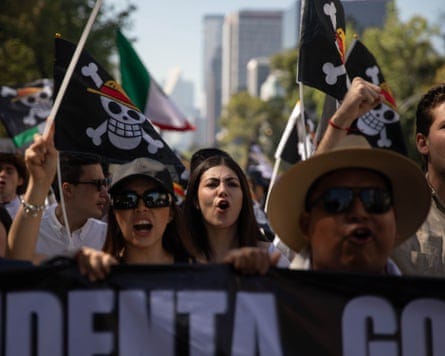
The video was two minutes and forty-seven seconds long.
Javier Hernández posted it at 2:47 AM on a Tuesday in late 2025, after watching footage of Mayor Carlos Manzo Rodríguez’s assassination for the sixth time. The walls in Javi’s room were thin enough that he could hear his mother crying in the next room. She had been crying since the news broke at 6 PM.
Seventeen bullets. Broad daylight. A public event in Veracruz with cameras everywhere.
The government held a press conference three hours later. They used the words “isolated tragedy.” They had used those exact words forty-seven times in the past decade about forty-seven different political murders.
Javi’s hands shook as he propped his phone against a stack of books. His voice didn’t shake.
“We grew up being told to stay quiet,” he said to the camera. “Our parents said it. Our teachers said it. The police said it. Stay quiet and maybe you’ll be safe. Keep your head down and maybe they won’t notice you. Accept how things are and maybe you’ll survive.”
He paused. In the recording you can hear a dog barking somewhere. A car alarm. The ordinary sounds of Guadalajara at 2:47 AM.
“But quiet hasn’t kept us safe. Quiet got us a mayor murdered in front of cameras and a government that calls it isolated. Quiet got us a country where we know the names of cartel leaders better than cabinet ministers. Quiet got us here, to a place where just wanting to live is somehow too much to ask.”
He looked directly into the camera.
“I don’t know what we’re supposed to do. But I know we can’t keep doing this. We can’t keep burying people who tried to make things better. We can’t keep pretending this is normal. We can’t keep staying quiet.”
He posted it. Went to sleep. Woke up six hours later to 50,000 shares.
By evening it was 8 million views.
By the next day, the youth of Mexico understood something their parents never could: acceptance was just death in slow motion.
Andrea Vega was 26, studying sociology at UNAM, when she realized she was tired of studying the disaster while living in it.
Her parents had survived the dirty wars of the 1970s. Her father had watched his best friend disappear in 1985, dragged into an unmarked van on a Tuesday afternoon. Never reported it. Never spoke his friend’s name again. Survived by erasing the memory.
That was the word Andrea’s generation had been raised on: survive. Keep your head down. Don’t make trouble. Be grateful you’re still breathing.
Andrea was tired of being grateful for the bare minimum of existence.
The morning after Javi’s video went viral, she walked into her 9 AM seminar on Social Movements and Political Change. Fifteen students. Half looked like they hadn’t slept. One girl in the back, Sofia, was crying quietly.
Her professor was a man who had written three books about institutional reform. He was setting up his PowerPoint about gradual change and working within systems.
Andrea stayed standing.
“What are we going to do about this?”
Professor Reyes looked up. “About what, Andrea?”
“About the mayor. About all of it. About everything we’ve been studying for five years while it keeps happening.”
“These things take time,” he said carefully. “Institutional change requires patience, strategic planning, working through established channels.”
“How much time?” Andrea’s voice was steady. The whole class was watching now. “We’ve been patient for forty years. Fifty years. How much more time do we need before we’re allowed to stop dying?”
Professor Reyes opened his mouth. Closed it. He had spent thirty years writing about change from a safe distance. He had never demanded it.
“I’m asking the class,” Andrea said, turning to face them. “What are we going to do?”
Silence. She counted the seconds. Forty-three.
Then Sofia in the back said quietly: “There’s already a group chat. People are organizing something.”
“Then let’s stop talking and start organizing.”
Professor Reyes said: “Andrea, you’re jeopardizing your...”
“My what? My education? My future?” She looked at him. “What future? The one where I write papers about why my friends are dying while my friends keep dying? I’m done studying the problem, professor. I’m going to try fixing it.”
By evening fifteen students were in that classroom mapping out a march route. By midnight there were fifty, many she’d never met, who’d heard somehow and just showed up. By dawn they had 2,000 flyers that someone paid for (Andrea never learned who) and something their parents’ generation had lost somewhere in the decades of violence: the belief that refusing to die might actually be possible.
The first campus forum: three hundred people in a lecture hall meant for one hundred. Standing room only. Students sitting in the aisles, on the floor, pressed against the walls.
Andrea stood at the front. Everything shook. Her hands. Her voice. Her legs. Everything except the words.
“We just want a country that isn’t killing us. That’s it. That’s the entire demand. Does that sound unreasonable to you?”
An older woman in the back stood up. Professor Martínez from the law school. “You’re young. You don’t understand how things work here. You can’t just demand...”
“We’re not demanding anything complicated,” Andrea said. “We’re demanding to be alive. We’re demanding that our government stop acting like our deaths are acceptable losses. If that’s impossible in this country, then this country is impossible. And maybe it’s time to say that out loud.”
The room went completely silent.
Then someone started clapping. Then everyone was clapping, standing, and Andrea realized: they had been waiting. All of them. Waiting for someone to say it was okay to stop accepting.
Three thousand students showed up for the first march.
They weren’t just protesting. They were doing what their parents couldn’t do: refusing to normalize mass murder. Refusing to accept that this was just how Mexico was. Refusing the terrible arithmetic that said some percentage of the population had to die and you just hoped it wasn’t you.
They were breaking the spell.
Lu Calderón was 20, studying communications in Puebla, watching his father die by inches.
His father owned a small electronics shop. Had paid protection money to the local cartel for fifteen years. Eight thousand pesos a month. Every month. Never missed a payment. Never called the police because everyone knew: calling the police was more dangerous than paying the cartel.
Lu had watched his father shrink. Watched him hand over the money with steady hands and dead eyes. Watched him teach Lu the same lesson he’d been taught: survive by accepting.
The night Javi’s video went viral, Lu sat in his dorm room and made a TikTok. Thirty seconds. His face. A plain wall behind him. No music. Just truth.
“They’re asking why we’re protesting. Here’s why: because our parents had to accept this. They had to stay quiet to keep us alive. They paid the protection money. They didn’t report the crimes. They taught us to keep our heads down. Not because they were cowards, because they loved us and thought acceptance was the price of our survival. But their silence didn’t save us. It just taught the system it could kill us without consequences. We’re not blaming our parents. We’re finishing what they couldn’t.”
By midnight: 50,000 views. By morning: 2 million.
He made another one. Looked straight into the camera, and this time his voice had an edge.
“The older generation says we don’t understand how things work. They’re right. We don’t understand how mass murder became background noise. We don’t understand how paying criminals for the right to exist became normal business practice. We don’t understand how a government can watch its citizens die for forty years and call it complicated. Maybe not understanding is our advantage. Maybe we’re just stupid enough to think it could be different.”
Five million views in eighteen hours.
His father called at 6 AM. Lu was still asleep. The phone rang until he answered.
“Take the videos down.”
“No.”
“You don’t know what they’ll do to you.” His father’s voice was shaking. “You don’t know...”
“I know exactly what they’ll do,” Lu said. “Same thing they’ve always done. The question is what we’re going to do about it.”
His father was quiet. Lu could hear him breathing. Could hear the sounds of the shop in the background: the metal gate rolling up, the bell chiming as someone entered.
“I’m sorry we left you this,” his father said finally. “I’m sorry we didn’t...”
“Then help us fix it.”
“How? I’m just...”
“Come to the march on Saturday.”
His father hung up without answering.
Saturday came. Lu went to the march not expecting his father to show. Expecting him to be at the shop. To be safe. To be doing what he’d always done.
His father was standing at the plaza entrance.
Next to him: Lu’s mother. Next to her: the Garcías who owned the pharmacy. The Rodriguezes who owned the restaurant. The Chavezes who owned the fruit stand. All of them had been paying protection money for years. All of them had survived by accepting.
Lu’s father saw him and started crying. Right there in the street. A 55-year-old man crying in public.
“I didn’t know we were allowed to say no,” he said. “I didn’t know that was an option.”
Lu hugged him. “It is now.”
The youth weren’t just protesting the government. They were showing their parents that the cage had never been locked. That acceptance was a choice, not a law of nature. That saying no was always possible: they had just been too afraid to try.
Camila Torres was 24, working at her family’s restaurant in Monterrey, trying to forget that her uncle had been murdered.
La Cocina de María. Named for her grandmother who started it in 1985 with money she’d saved for twenty years.
Camila’s uncle had been killed by the cartel in 2019. Execution-style. They left his body on the street two blocks from the restaurant as a message about protection payments. The family never reported it. Never talked about it. They closed the restaurant for three days, then opened it again and acted like it never happened.
Her mother’s words: “This is how it is. This is how it’s always been. We survive by not making waves.”
When Camila’s friend Daniela texted about a march, Camila said no.
Daniela texted again. Camila said no.
Third time: “Please. I don’t want to go alone.”
“It won’t change anything,” Camila texted back.
“So we should just accept it?”
Camila stared at her phone. Thought about her uncle. Thought about her mother’s face at the funeral: not crying, just blank, like she’d practiced not feeling until she couldn’t feel anymore. Thought about how acceptance had hollowed out her entire family.
“Fine,” she texted. “One hour. Then I have to get back to the restaurant.”
The march reached Plaza de la Independencia at 4 PM on a Saturday. The afternoon sun was brutal. The kind of heat that makes you squint.
Riot police were waiting. Full gear. Shields. Batons. Sixty of them in a line across the plaza entrance.
The crowd stopped. A thousand people facing sixty officers. Nobody moving. Just standing there in the heat.
Camila had been walking in the middle. Safe. Anonymous. Planning to stay an hour and leave.
But crowds have their own logic. They push. They shift. And suddenly she was at the front, close enough to see her own reflection in a police shield.
An officer raised his baton.
Behind Camila, people started backing up. This was the moment. The moment that had been happening for forty years. The moment when Mexicans saw force and went home and accepted.
Camila opened her mouth.
She didn’t plan what to say. Hadn’t rehearsed it. The question just came out, and she asked it the way you’d ask any genuine question you genuinely wanted answered:
“Why is wanting to stay alive treated like rebellion?”
Her voice wasn’t loud. But in the silence it carried.
The officer looked at her. Said nothing.
Someone behind her whispered: “Say it again.”
Camila said it louder: “Why is wanting to stay alive treated like rebellion?”
The officer’s hand tightened on his baton. Camila could see his eyes behind the face shield. Young. Maybe 25. Scared, she realized. He was as scared as she was.
“We’re not doing anything wrong,” Camila said, and now her voice was steady. “We’re just asking not to be killed. Why does that require riot gear? Why does that require batons? Why is this treated like a threat?”
The officer lowered his baton slightly.
Someone started filming.
The officer looked at the officer next to him. Nobody moved. Thirty seconds. A minute. The crowd held its breath.
Then the line broke. The officers stepped aside. The march continued.
By morning the video had 3 million views. By evening every news station in Mexico was playing it. By the next day someone had painted Camila’s question on a wall in Oaxaca. Then Guadalajara. Then Mexico City. Then on bridges, buildings, bus stops, anywhere paint would stick.
¿Por qué querer vivir se trata como rebelión?
The question spread because it cut through everything. Every government excuse. Every call for patience. Every claim that the protesters didn’t understand complexity.
It named the thing everyone had felt but no one had articulated: the system required them to accept their own deaths. Acceptance was what made the violence sustainable.
Camila’s mother called that night.
“I saw the video.”
“I’m sorry,” Camila said. “I know you wanted me to stay quiet. I know you taught me...”
“I taught you wrong.” Her mother’s voice cracked. “I taught you to accept because I thought that’s how you survive. But you’re right. We’re not surviving. We’re just dying slowly and pretending it’s life. I’m sorry I taught you that.”
Behind everything, in encrypted channels the government couldn’t penetrate, someone called Río kept them alive.
Nobody knew who Río was. The rumors multiplied: former intelligence officer who’d seen too much, hacker collective from Tijuana, someone who’d lost their entire family to cartel violence, an AI someone had trained on forty years of Mexican political patterns.
What everyone knew: Río had capabilities their parents’ generation never had.
Could navigate digital spaces the government barely understood. Could encrypt communications. Track police movements in real-time across multiple cities. Identify infiltrators before they did damage. Coordinate actions across regions simultaneously. Make information impossible to suppress.
The infrastructure appeared in layers. First: Telegram channels with thousands of members, organized by city and region. Then: Signal groups for sensitive planning. Then: encrypted maps that updated live showing police positions, safe routes, compromised areas, infiltrators.
When Andrea needed lawyers at 2 AM after fifteen students were arrested, Río sent a list of names and phone numbers in twenty minutes.
When Lu needed to verify information before posting it, Río had sources and documentation within an hour.
When Camila needed to disappear for three days because Monterrey police were asking questions about her, Río sent an address and instructions: “Go here. Don’t tell anyone. You’ll be safe. Someone will bring you food.”
She went. She was safe.
The warnings came constantly: “Police massing east side of Reforma. Avoid the plaza. Use secondary route B through residential area.” “Infiltrator in northern organizing group. Account created 48 hours ago. Posts like an algorithm, not a person. Block immediately.” “Three journalists from El Heraldo are feeding information to state security. Do not share locations or plans with them.” “Mass arrests planned tomorrow at dawn. If you’re on any lists, stay home or bring documents and a lawyer’s number.”
Every warning was accurate. People started trusting Río more than they trusted their own assessment of safety.
Once, Andrea sent a message: “Who are you?”
Río replied: “Does it matter?”
“I’d like to know who I’m trusting with people’s lives.”
“You’re not trusting me. You’re trusting the information. The information is either accurate or it isn’t. Who provides it is irrelevant.”
Andrea thought about this. “But what if you’re compromised? What if they get to you?”
“Then the information will stop being accurate. Until then, assume it is.”
Years later, after everything had changed or at least shifted, someone asked Andrea if she ever learned who Río was.
“No.”
“Did you want to?”
“Yes. But Río was right. It didn’t matter who they were. What mattered was someone was watching all the pieces on the board, seeing patterns we couldn’t see, trying to keep us alive.”
This was the youth’s weapon: information. While their parents had memories that could be denied, the youth had evidence that could be documented, backed up, distributed across platforms faster than it could be destroyed.
While their parents had to rely on word of mouth that could be suppressed, the youth had digital networks the government couldn’t fully control.
While their parents had to accept the official version of events, the youth could create their own version with video, timestamps, geolocation data, hospital records, witness accounts.
They weren’t smarter than their parents. They just had tools their parents never had.
And they knew how to use them.
The first march was supposed to be small.
Organizers hoped for a thousand people. Would have settled for five hundred. Prepared signs and routes and medical supplies for two hundred.
Thirty thousand showed up in Mexico City.
Ten thousand in Guadalajara. Eight thousand in Monterrey. Five thousand in Puebla. Three thousand in Tijuana. Two thousand in Oaxaca. One thousand in cities that hadn’t seen protests in twenty years.
They came with signs. They came with flowers. They came with photos of people who couldn’t come because they were dead. They came with their parents.
That was the thing nobody expected.
Parents who had spent decades teaching their children to stay quiet, now walking beside them in the streets.
A woman in her fifties held a sign: “I TAUGHT MY DAUGHTER TO BE SILENT. SHE TAUGHT ME TO BE BRAVE.”
A man in his sixties: “I SURVIVED BY ACCEPTING. MY GRANDCHILDREN WILL LIVE BY DEMANDING.”
A mother with three children: “I STAYED QUIET TO KEEP THEM SAFE. QUIET DIDN’T WORK.”
The youth hadn’t just mobilized themselves. They’d broken the spell for everyone. Shown their parents that the cage was never locked. That acceptance was a choice that could be unmade.
The government tried the usual things. Called them manipulated. Blamed foreign actors (vague about which ones or what they’d done). Blamed opposition parties looking to destabilize the administration. Blamed the internet and social media and outside agitators.
Offered committee hearings. Task forces. Thorough investigations. Promised to study the root causes and develop comprehensive reform proposals with stakeholder input and evidence-based policy recommendations.
The protesters said no.
“They keep saying we’re being unrealistic,” Lu said in a video that got 7 million views. “What’s unrealistic? Asking not to be murdered? What’s unrealistic is expecting us to negotiate about whether we deserve to exist. What’s unrealistic is asking us to wait patiently while they study why we’re dying. We’re done being realistic. Realistic has killed us for forty years.”
The pushback came in waves.
First: dismissal. Just kids. They’ll get tired. They have school, jobs, responsibilities. Eventually they’ll have to go back to normal life.
Then: rhetoric. They’re manipulated. They don’t understand how complex this is. They’re being used by political opponents who want to destabilize the government.
Then: force.
December 15th. The Zócalo. Friday evening. Twenty thousand protesters. The largest gathering yet.
The police charged at 6:47 PM.
Nobody knew who gave the order. Nobody knew why that moment. But the line of riot police advanced and the crowd scattered and in the chaos, in the panic, in the smoke from tear gas, six people died.
The government said four. Said protesters started it. Said police had no choice, were defending themselves, responded proportionally to threats.
Every video showed police charging first.
The government classified the videos as evidence in an ongoing investigation. Demanded platforms remove them. Threatened journalists who shared them with charges of interfering with law enforcement operations.
The videos multiplied instead.
Backed up. Downloaded. Distributed across platforms the government couldn’t shut down simultaneously. Sent through encrypted channels. Posted from accounts in other countries. Shared through networks that had been built specifically for this purpose.
The doctors at Hospital General confirmed six deaths. Went on camera with names and hospital records and time of death and cause of death.
Within twenty-four hours, two of those doctors were fired. Hospital administration said budget cuts.
One doctor disappeared. Dr. Juan Carlos Medina. 38 years old. Wife and two children. Last seen leaving the hospital at 11 PM on December 16th. Told his wife he’d be home by midnight. Never arrived.
The hospital said he’d resigned. His wife said she hadn’t heard from him in three days.
The protesters documented that too. Created a list. Distributed it. Made it impossible to ignore.
“Our parents had to remember,” Andrea said in an interview with a journalist who’d been covering the protests since the beginning. “Their stories disappeared because memory disappears. But we can make it impossible to forget. We can create evidence that survives longer than any of us.”
By January the protests had been going on for six weeks.
The government thought they would have stopped by now. The youth had school. Finals. Jobs. Rent to pay. Life. Eventually they’d have to return to normal.
Except normal was the problem.
Normal was where their friends disappeared. Where violence was background noise you learned to tune out. Where corruption was just how business worked. Where survival meant keeping your head down and accepting that some percentage of the population had to die and you just hoped it wasn’t you.
The youth weren’t going back to normal. Normal was what they were fighting.
Javi still streamed every night from Guadalajara. His follower count hit 5 million. His mother begged him to stop. He said: “I can’t. If I stop, I’m accepting. I’m done accepting.”
Andrea still organized at UNAM. Hadn’t attended a regular class in four weeks. Her professors said she was throwing away her education, her future, everything she’d worked for.
She said: “What future? The one where I study why my friends are dying while they keep dying? I’m done studying the disaster. I’m trying to stop it.”
Camila still asked her question in Monterrey. Someone painted it on the restaurant wall. Her father tried to paint over it. Got halfway through. Stopped. Left it.
“Leave it,” he said. “She’s right. Why is wanting to live treated like rebellion?”
Río still sent warnings from the dark. Had prevented four mass arrests. Identified eleven infiltrators before they could do damage. Provided safe houses for thirty-two people who needed to disappear temporarily.
And across Mexico, young people kept showing up.
Day after day. Week after week. Month after month. Doing what their parents couldn’t: refusing to treat death as the cost of doing business.
There was no single moment when everything changed.
But there were moments when you could see the cracks spreading:
January 8th. Guadalajara. A police officer (24 years old, five months on the job) put down his shield in the middle of a standoff and walked off the line.
The crowd went silent. Watched him walk toward them. He stopped ten feet away.
“I can’t do this,” he said. His voice was shaking. “I can’t protect the same system that would kill me if I lived in the wrong neighborhood. I can’t...”
The crowd parted. Let him through. He kept walking.
By the next day, three more officers had walked away. By the end of the week, twelve.
January 15th. Sinaloa. A cartel member posted a video. Face hidden. Voice distorted through software.
“I joined when I was sixteen because there was no other way to survive. No jobs. No future. Just the cartel or poverty or both. I did things I can’t take back. But these kids are showing us there might be another way. I’m done. I’m out.”
Within a week, seven more videos like it appeared. Some from Sinaloa. Some from Michoacán. Some from Tamaulipas. All saying the same thing: I’m done.
January 22nd. Jalisco. A state legislator resigned on live television during a session.
“I’ve spent twenty years telling young people to work within the system,” he said. His hands were shaking. The camera was on him. Everyone was watching. “I’ve spent six weeks watching them show me the system is what needs to change. I’m done pretending reform works. We need something new. I don’t know what. But I know this isn’t it.”
He walked out. The chamber erupted. By morning he’d received 4,000 death threats and 40,000 messages of support.
Small moments. Individual choices. But together they were cracks spreading through concrete. The wall was breaking.
February.
The protest moved to the presidential palace. One hundred thousand people. The largest gathering in Mexican history.
They marched in silence. No chants. No songs. No drums. Just the sound of one hundred thousand people walking through Mexico City.
The silence was more terrifying than any noise could have been.
They stopped at the gates. Nobody tried to break in. Nobody threw anything. They just stood there. One hundred thousand people in complete silence.
At the front of the crowd, Andrea held a microphone. Her voice carried across the plaza, amplified by speakers someone had set up.
“We’re here because we want to live. That’s it. That’s the entire message. We’re not demanding revolution. We’re not demanding your resignation. We’re demanding the right to exist in our own country without fear of being murdered. If you can’t give us that (if that’s impossible) then you need to explain why. Not to us. To yourself. To your children. To history.”
She lowered the microphone.
One hundred thousand people stood in silence.
Nobody left.
They stood there for six hours. Silent. Waiting for an answer that never came.
At midnight, they went home.
The next day, they came back. And the next day. And the next.
The protests continue.
Nobody knows how it ends. Maybe it doesn’t end. Maybe it just becomes the new normal (a generation that refuses to accept death as policy).
What’s clear is this: the youth are doing what no one else could do.
Their parents survived the violence. The youth are trying to end it.
Their parents learned to live with corruption. The youth are demanding accountability.
Their parents accepted that this was just how Mexico was. The youth are insisting Mexico could be something else.
They’re not naive. They understand the cartels are powerful. They understand the government is compromised at every level. They understand the system has survived every reform attempt for forty years. They understand that what they’re attempting might be impossible.
But they also understand this: the system survives because people accept it. And they’ve decided to stop accepting.
“People ask if we think we can win,” Lu said in his most recent video. The camera was close enough to see how tired he looked. How much weight he’d lost. How the last three months had aged him. “That’s the wrong question. Our parents spent forty years asking if they could win, and while they were calculating the odds, forty years of us died. We’re not asking if we can win anymore. We’re asking if we can live with ourselves if we don’t try. And the answer is no. We can’t. So we keep showing up.”
Camila’s question is painted on walls across Mexico now. In every city. Every town. Anywhere paint will stick.
¿Por qué querer vivir se trata como rebelión?
Why is wanting to stay alive treated like rebellion?
No one in power has tried to answer it. Because there is no answer that doesn’t admit what everyone already knows: the system needs them to accept their deaths. Acceptance is what makes the violence sustainable. Acceptance is what allows corruption to function. Acceptance is the foundation of everything.
The youth won’t accept it.
That’s the revolution. Not the demands. Not the tactics. Not the ideology. Just the simple, absolute refusal to treat murder as normal. To treat corruption as inevitable. To treat fear as the natural state of existence.
Their parents survived by staying quiet.
The youth understand that staying quiet is what’s killing them.
So they speak. They march. They film. They document. They organize. They show up.
Not because they’re sure they’ll win. But because they’re sure that not trying is the same as dying slowly, and they’re done dying slowly.
They’re done accepting the unacceptable. They’re done treating survival as victory. They’re done being grateful for the bare minimum of existence.
They’re done.
The video was two minutes and forty-seven seconds long. Javi posted it at 2:47 AM on a Tuesday in late 2025.
It’s been playing for three months now. In Guadalajara and Mexico City and Monterrey and Puebla and Tijuana and Oaxaca and a thousand small towns where people had learned to stay quiet.
It’s been playing in the streets and on walls and in encrypted channels and in the minds of a generation that looked at forty years of violence and said: no more.
It shows no signs of stopping. And neither do they.
Support independent journalism. If this story moved you, consider becoming a paid subscriber. Work like this,deeply reported, carefully crafted, unafraid to document the movements reshaping our world,takes time and resources. Your subscription makes it possible.
Why I Wrote "No Más"
I wrote this story because I'm exhausted by a particular kind of silence.
Not the silence of people who have nothing to say, but the silence of people who have been taught that speaking will get them killed. The silence that gets mistaken for acceptance. The silence that systems of violence depend on to sustain themselves.
For years, I've watched a generation come of age in contexts where staying quiet was framed as wisdom, where keeping your head down was called survival, where acceptance of the unacceptable was repackaged as pragmatism. And I've watched that same generation begin to reject that equation entirely.
This story isn't journalism,it's a thought experiment about what happens when a generation realizes that the "safety" their parents bought with silence wasn't safety at all. It's about the moment when people understand that acceptance is just death in slow motion, and that the cage was never actually locked.
Why It Matters
Because acceptance is always political. When we accept violence as inevitable, corruption as unchangeable, or death as "just how things are," we're not being realistic,we're participating in the system that produces those outcomes. The youth in this story understand something profound: the system survives because people accept it. Take away acceptance, and the entire structure becomes unstable.
Because every generation inherits the compromises of the last. The parents in this story aren't villains. They made rational choices in impossible circumstances. They stayed quiet because speaking up got people killed. They paid the protection money because refusing meant death. They taught their children to survive because they loved them. But those survival strategies, multiplied across millions of people over decades, became the foundation that made continued violence possible.
Because documentation changes everything. One of the most important threads in this story is Río and the digital infrastructure. The youth aren't braver than their parents,they have tools their parents never had. They can document. They can encrypt. They can distribute evidence faster than it can be destroyed. They can make it impossible to forget. That changes the calculus of resistance entirely.
Because questions can be more powerful than demands. Camila's question,”Why is wanting to stay alive treated like rebellion?",cuts through every layer of complexity and excuse. It names the foundational absurdity of systems that require citizens to accept their own deaths. It's not a policy proposal. It's not a negotiating position. It's a question that can't be answered without admitting what everyone already knows.
What I Hope Readers Take From This
This story is about Mexico, but it's not only about Mexico. It's about any context where violence has been normalized, where corruption has been institutionalized, where fear has become background noise.
It's about the moment when people stop asking "Can we win?" and start asking "Can we live with ourselves if we don't try?"
It's about understanding that realistic often just means accepting the unacceptable, and that being called naive by people who've spent decades managing decline might actually be a sign you're onto something.
It's about the power of refusal,not refusal backed by force or ideology, just the simple, absolute refusal to treat murder as normal.
The Bigger Picture
We're living through a moment when young people around the world are looking at systems that have been presented as inevitable and asking: Why? Why this way? Why not something else?
They're not asking politely. They're not waiting for permission. They're not calculating odds or conducting cost-benefit analyses. They're just refusing to accept frameworks that treat their deaths as acceptable losses.
That refusal is its own kind of power. It doesn't guarantee victory. It doesn't make the fight easier. But it changes what's possible by changing what's acceptable.
The youth in this story understand something that often takes older generations decades to learn: you don't need permission to stop accepting the unacceptable. You don't need a perfect plan or guaranteed success. You just need to stop pretending that normal is acceptable when normal is killing you.
That's why I wrote this. Because I wanted to capture that moment of refusal. That instant when acceptance breaks and something else becomes possible.
Whether it's enough, whether it works, whether they win,that's not the point. The point is they're trying. They're refusing. They're showing up.
And sometimes, that's where everything starts.
If this resonated with you, I'd love to hear why. And if you think others need to read it, share it. Stories about refusal need to travel.
https://open.substack.com/pub/joadt/p/no-mas?r=5ccpro&utm_medium=ios
As always, great article Tom.
Mexico is in a gawd awful situation with the cartels, and has been for decades. Not to mention that our own US Government aided and abetted these same cartels, who continue to evolve with youth, that has the same capabilities if not more, then the brave protesters you write about here.
How does a country or for that matter a hemisphere, eradicate this murderous disease these cartels have become?
I wish I had the answer……..
Is Trump right to use our military? Maybe, but to what end, at what cost, and what is driving his real interest…..OIL?
While reading your article I could not help but think about our own youth here in the US.
41 million members of Generation Z were eligible to vote in the 2024 presidential election. But, the few who actually took the time to vote, voted for Trump!
I see that as the same “acceptance” the elders had in your article but, to one man, not a cartel. Which in my eyes is even worse. Normalizing Trump is the same acceptance.
My hope is that Gen Z has finally seen the light in that Trump & the Republicans have sold them, as well as the rest of the country a bill of goods, not worth the paper it was documented on, and will finally put an end to their chaos by voting en masse in all of our upcoming & future elections.
RESIST !!!!!!!!!!!!!!!!!!!!!!!