

Las Doce Uvas de la Suerte
The Twelve Grapes

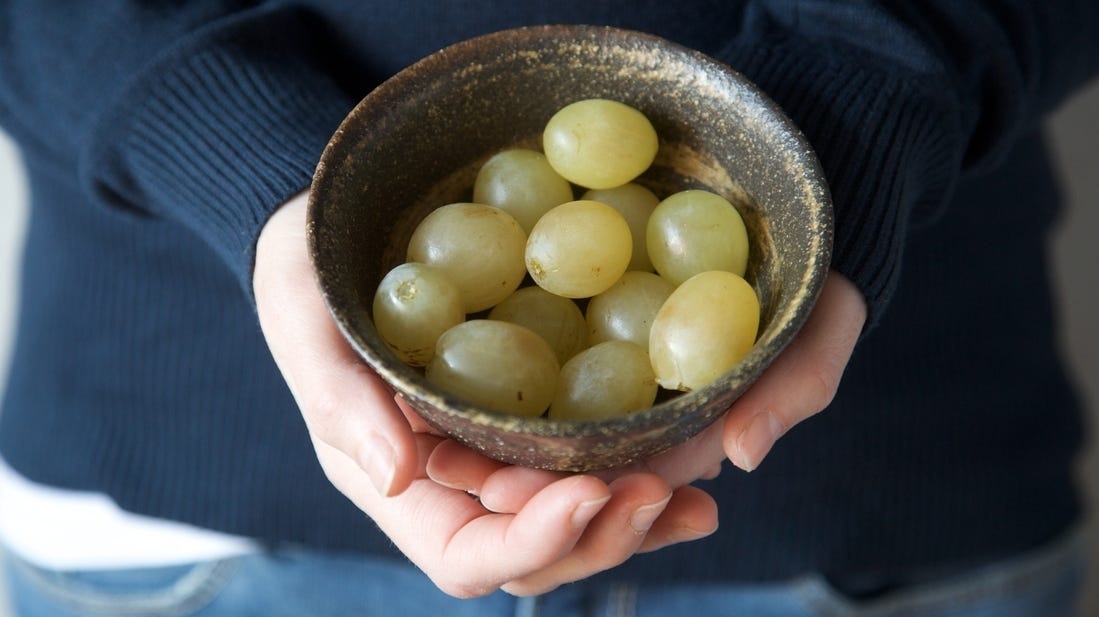
Luz bought the grapes on December 30th because that is when you buy grapes for New Year’s Eve if you are the kind of person who believes in such things, which Luz was. Twelve grapes for each person. Green, seedless. She counted them twice in the produce section of the Safeway on Speedway, her fingers moving over each grape as if the counting itself could guarantee something.
Con quien pasas el año nuevo, pasas todo el año.
Who you’re with on New Year’s, you’re with all year. Her mother had told her this. Her grandmother had told her mother. Luz did not know if she believed it, but she knew she could not afford not to believe it, which is a different thing entirely.
The apartment in Tucson was on the second floor of a complex built in 1987. One bedroom, 680 square feet, $875 a month. Mateo and Sofía shared the pullout couch. Luz slept in the bedroom with Miguel’s work boots still by the door because moving them would require deciding what to do with them, and she had not yet decided. It had been eleven months.
December 31st she worked the morning shift at the Marriott on Broadway. Seventeen rooms. She knew it would be seventeen before she started because she had worked New Year’s Eve for the past six years and it was always seventeen rooms on the morning shift. By 2 PM her back hurt in the specific way it hurt after seventeen rooms, which was different from the way it hurt after twelve rooms or twenty-three rooms. She knew these distinctions the way other people know the difference between types of wine.
Rosa asked her about her plans while they were folding towels in the supply room on the third floor.
“Just the kids,” Luz said. “Quiet.”
Rosa nodded. Rosa’s husband had left her in 2019. Rosa understood about quiet New Year’s Eves with just the kids.
Luz tried calling Sofía at 2:30 PM to tell her she was leaving work. The call went to voicemail. This was normal. Sofía was thirteen. Her phone was always either dead or on Do Not Disturb or simply ignored when her mother called.
She tried again at 2:45 from the parking lot. Voicemail.
At 3:15, pulling into the apartment complex, she tried again. Voicemail.
The apartment was empty. This was not normal. Sofía was supposed to be watching Mateo. Mateo was eight. You did not leave an eight-year-old alone.
Luz called Sofía four more times. Voicemail, voicemail, voicemail, voicemail.
She called Mateo’s phone, the cheap prepaid one she had gotten him for emergencies. He answered on the second ring.
“Mijo, where are you?”
“At Diego’s.”
“Where’s your sister?”
“I don’t know. She told me to go to Diego’s at one o’clock. She said she’d come get me at five.”
“Did she say where she was going?”
“No.”
Luz felt the tightness start in her chest. The same tightness that had started eleven months ago when Miguel stopped answering his phone. When hours became days became weeks became the knock on the door that never came because there was no body to identify, just the desert and the silence.
“Stay at Diego’s,” Luz said. “I’ll come get you soon.”
She called Sofía six more times. She texted: WHERE ARE YOU. She texted: CALL ME NOW. She texted: SOFIA ANSWER YOUR PHONE.
At 4 PM she called the two numbers she had for Sofía’s friends. Ximena’s mother said Sofía wasn’t there. Hadn’t been there all day. Valentina’s mother said the same thing.
At 4:30 Luz called the Tucson Police non-emergency line. The woman who answered had a tired voice.
“My daughter isn’t answering her phone,” Luz said.
“How old?”
“Thirteen.”
“How long has she been missing?”
“Since this afternoon. Maybe one o’clock.”
“Has she run away before?”
“No.”
“Any reason to think she’s in danger?”
Luz did not know how to answer this. There were so many reasons to think everyone was in danger all the time. That was the problem.
“I don’t know where she is,” Luz said.
“Ma’am, thirteen-year-olds don’t answer their phones. If she’s not home by tonight, call back.”
The woman hung up.
At 5 PM Luz picked up Mateo.
At 6 PM Sofía had been gone for five hours.
At 7 PM, six hours.
At 8 PM Luz called the police again. A different woman, same tired voice.
“She’s been gone since one o’clock,” Luz said. “Seven hours.”
“Has she run away before?”
“No.”
“Any reason to believe she’s been abducted?”
“I don’t know. I don’t know where she is.”
“Ma’am, teenagers leave the house. If she’s not home by tomorrow morning, file a report.”
At 9 PM Luz could not eat. Mateo ate leftover tamales standing up in the kitchen, watching his mother dial Sofía’s number again and again.
At 10 PM Luz called Ximena’s mother again.
“Please,” Luz said. “If you know where she is. If Ximena knows. Please.”
“I’m sorry,” Ximena’s mother said. “I’ll ask again. But Ximena says she doesn’t know.”
At 11 PM the television was on. The plaza in Mexico City. Thousands of people waiting for midnight. Families together.
The grapes were still on the counter. Twelve in each bowl. Luz had counted twice.
Mateo sat on the couch. He had not asked where Sofía was in over an hour. He had learned, at eight years old, that sometimes asking made it worse.
At 11:30 Luz sat down next to him. She did not know what else to do.
“We’ll do the grapes,” she said. “When she comes home, she can do hers.”
Mateo nodded.
At 11:58 the plaza filled the screen. Families. Everyone together. Everyone with someone.
Con quien pasas el año nuevo, pasas todo el año.
Luz looked at the grapes. At Sofía’s empty bowl. At Mateo beside her, too quiet.
The bells started.
Luz ate her grapes. One for each bell. They tasted like nothing. Mateo ate his, mechanical, his eyes on the television. On the screen people were embracing. Fireworks. Celebration. The camera panning across faces, all of them with someone, all of them knowing where everyone was.
The bells stopped.
Sofía’s bowl sat on the counter. Twelve grapes, uneaten.
At 12:03 AM Luz called the police again.
“My daughter has been missing since one o’clock yesterday afternoon,” she said. “Eleven hours.”
“How old?”
“Thirteen.”
“Name?”
“Sofía Reyes.”
“Your name?”
Luz hesitated. This was the moment. This was always the moment.
“Luz Reyes.”
“Address?”
She gave it.
“We’ll send an officer.”
The officer arrived at 12:47 AM. He was young. He took notes. He asked for a recent photo. Luz showed him the one on her phone from Christmas, Sofía and Mateo in front of the small tree Luz had bought at Walgreens.
“Does she have a boyfriend?” the officer asked.
“No.”
“Any history of running away?”
“No.”
“Any problems at school?”
“No.”
“Any reason she’d want to leave?”
Luz thought about this. About the 680 square feet. About Miguel’s boots by the door. About being thirteen and living in an apartment where your mother cleaned hotel rooms and your father had disappeared into the desert and nothing was ever going to be different.
“No,” Luz said.
The officer said he would file a report. He said most teenagers came home within twenty-four hours. He said to call if she heard anything.
At 1 AM Luz lay in bed with Miguel’s boots still by the door. She thought about con quien pasas el año nuevo, pasas todo el año. She thought about Sofía, wherever she was. She thought about the bells at midnight, and eating twelve grapes alone except for Mateo, and what it meant to start a year without knowing where your daughter was.
The apartment was quiet. The heat had shut off at 10 PM. She could hear the building settling. Could hear Mateo’s breathing from the other room, deeper now, finally asleep.
She could not hear Sofía. That was the problem. She had always been able to hear Sofía. The rustle of her moving in her sleep. The sound of her phone vibrating. The particular way she sighed when she was annoyed. For thirteen years Luz had known where Sofía was by sound.
Now there was nothing.
At 2 AM she got up and checked her phone. No calls. No texts.
At 3 AM the same.
At 4 AM Mateo was asleep on the pullout couch, taking up only half of it, the space where Sofía should have been empty and obvious.
At 7 AM Luz called the police again. No news.
At 8 AM she called hospitals. No one matching Sofía’s description.
At 9 AM she sat at the kitchen table and stared at Sofía’s bowl of grapes. They had started to wrinkle slightly. Twelve of them. Still uneaten.
What Luz did not know, what she would not know for six days, was that Sofía had accepted a ride from Ximena’s older brother at 1:15 PM on December 31st. That he had been driving without a license. That the traffic stop on Sixth Avenue had been routine until the officer ran everyone’s names. That Ximena’s brother had papers but Sofía did not. That at thirteen years old, with an expired visa and no proof she had been brought here at age three, she had been arrested on federal immigration charges. That she had been processed at a facility in Eloy. That she had been too scared to give them her mother’s phone number because she was afraid they would come for Luz next. That she had given them her father’s number, the one that had not worked for eleven months.
What Luz did not know was that Sofía had spent New Year’s Eve in a detention center with forty-seven other girls, eating cafeteria food from a tray, no grapes, no bells, no family.
What Luz did not know was where her daughter was.
What Luz knew was this: the grapes on the counter. The empty space on the couch. The television showing families in Mexico City, all of them together. The old wives’ tale that who you’re with on New Year’s, you’re with all year.
She had spent midnight with Mateo.
Only with Mateo.
Con quien pasas el año nuevo, pasas todo el año.
The year stretched ahead. Luz did not know what it would bring. She did not know when she would see Sofía again. She did not know if the old wives’ tale was true.
She knew only that she had started the year without her daughter.
And now she would have to live it.
Happy New Year. May you spend it with everyone you need.
If these stories matter to you, please consider becoming a paid subscriber. It’s what makes this work possible.
Spare, powerful, poignant and all too fucking real.
Bravo, sir.
As a privileged white woman, this makes me ashamed of what has come out of my heritage.
As a mother, this makes me infuriated and heartsick.
To this have we come.
I wish I could fix it.